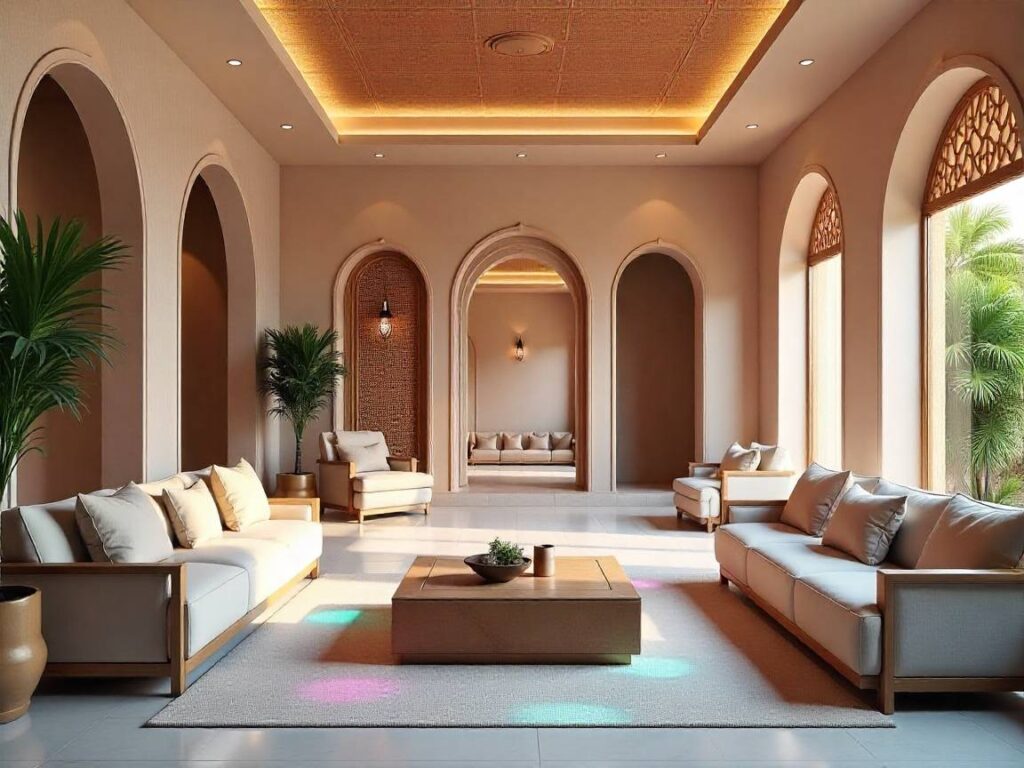
This service guide helps clients navigate modern Omani interiors and match project goals with the right partner. It sets the stage for practical choices in fit-outs, materials, and technical scopes.
Expect a concise market overview plus culturally rooted context on majlis planning, mashrabiya screens, and Omani motifs that shape contemporary layouts without sacrificing comfort.
We preview 2025 priorities like refined materials, bespoke joinery, and smart planning that boost lifecycle value and energy performance. The page highlights proven teams in Muscat with strong documentation and trade access.
Profiles cite real capabilities from Creative Fox, Mashhad Oman, and Delta Gulf Overseas — from 3D renders and bespoke metal work to turnkey project management and MEP scopes. This helps clients turn vision into executable scope and reduce late changes.
The sections that follow cover cultural influences, trend analysis, residential vs. commercial needs, top Muscat firms, selection criteria, services to request, budgeting, timelines, and sustainable smart upgrades.
Introduction to Modern Omani Interiors and Market Overview
A new generation of projects blends cultural elements with rigorous technical planning to reduce onsite surprises. This shift means clients expect both inspiring concepts and clear, executable steps from concept to completion.
Market sophistication is rising. Homeowners, retailers, and hoteliers now ask for schemes that honor heritage while meeting modern performance and maintenance standards.
Good interior design starts with a concise concept that interprets needs, codes, and adjacencies into a staged process. Milestones for approvals and procurement keep timelines and budgets on track.
- Many Muscat firms combine upfront planning with shop drawings, MEP documentation, and site supervision to cut gaps between intent and build.
- Typical segments—residential, retail, F&B, hospitality, corporate—each set different schedule and budget expectations tied to measurable outcomes.
- Photorealistic renders and sample boards are now standard to align stakeholders before site work begins.
Clients prefer integrated teams that coordinate joinery, lighting, HVAC, and life-safety to lower interface risk. Firms such as Creative Fox and Delta Gulf Overseas emphasize end-to-end support, which keeps designing aligned with cost and time realities.
Interior Design Oman
A productive search focuses on firms that turn early consultation into realistic execution plans.
Users looking for vetted teams in Muscat often want groups that can mobilize crews across the country and offer a single point of contact. This search usually targets reliable interior firms and local specialists who manage logistics and quality outside the capital.
Start with a short discovery call where clients share site condition, scope, target dates, and budget bands. This helps the team give a realistic view of deliverables and early cost ranges.
- Ask for an outline proposal with concept direction, key finishes, a preliminary program, and clear inclusions/exclusions.
- Request photorealistic renders and physical samples early to reduce revisions downstream.
- Confirm the firm’s subcontractor network and logistics plan to ensure consistent quality nationwide.
Finally, seek clarity on authority approvals, landlord rules, and mall compliance before signing. Firms such as Creative Fox and Delta Gulf Overseas present clear pathways from brief to turnkey delivery and can advise on approvals and practical solutions.
Cultural Influences Shaping Design: Majlis, Mashrabiya, and Omani Motifs
Local traditions guide spatial choices that balance ceremony, comfort, and technical buildability. These cues help teams plan scope, finishes, and procurement so cultural elements integrate cleanly into a project schedule.
Majlis layouts for hospitality and community
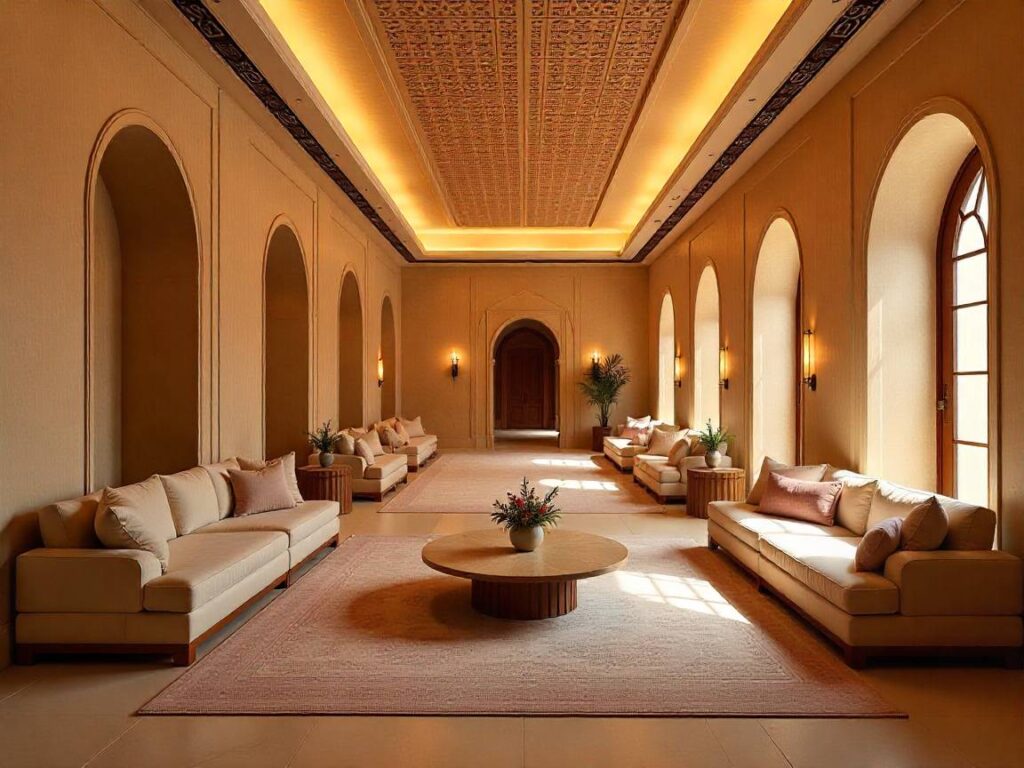
Plan generous seating banks, clear circulation, and layered acoustics to support long gatherings. Use zone planning so service paths stay out of sightlines and rituals remain intact.
Consider modular furniture that reads formal but can be reconfigured. This keeps hosting rituals while meeting space-efficiency goals.
Mashrabiya screens for privacy, shading, and airflow
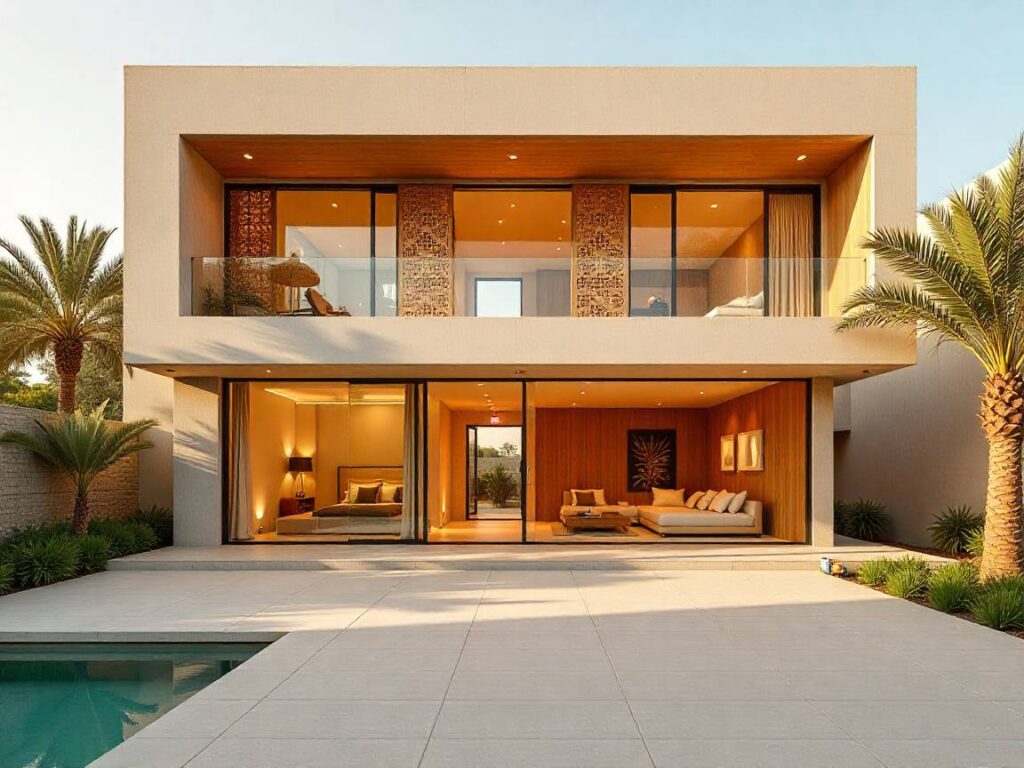
Mashrabiya act as climate and privacy devices. They control daylight, reduce heat gain, and enable cross-ventilation when placed at strategic openings.
Integrate screens as operable or fixed elevations, with metal or CNC timber panels that align with modern facades and interior elevations.
Omani motifs: geometric patterns, carving, and materials
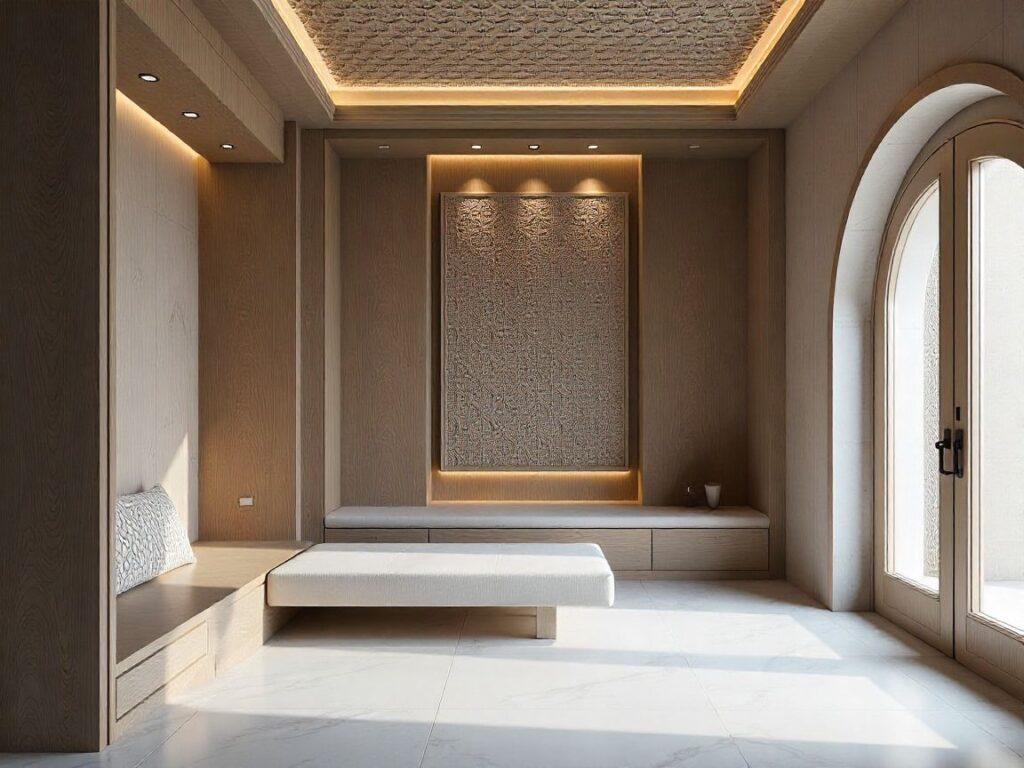
Translate geometric work and Arabesque carving into feature walls, joinery doors, or ceiling insets. Keep detailing minimal so patterns read as refined rather than busy.
- Durable palettes: veneered wood, solid surface, and patterned tiles for high-use areas.
- Furniture layouts that preserve sightlines and ritual seating while optimizing flow.
- Partner with artisans for carved panels or custom metalwork to add authenticity.
- Use trims, reveals, and targeted lighting to highlight motifs with a sense of elegance.
2025 Design Trends in Oman: Modern Luxury, Sustainability, and Smart Homes
Refined material choices and integrated systems are shaping premium homes across Muscat in 2025. These trends help teams deliver high-value projects that feel both warm and contemporary.
Modern finishes and bespoke joinery
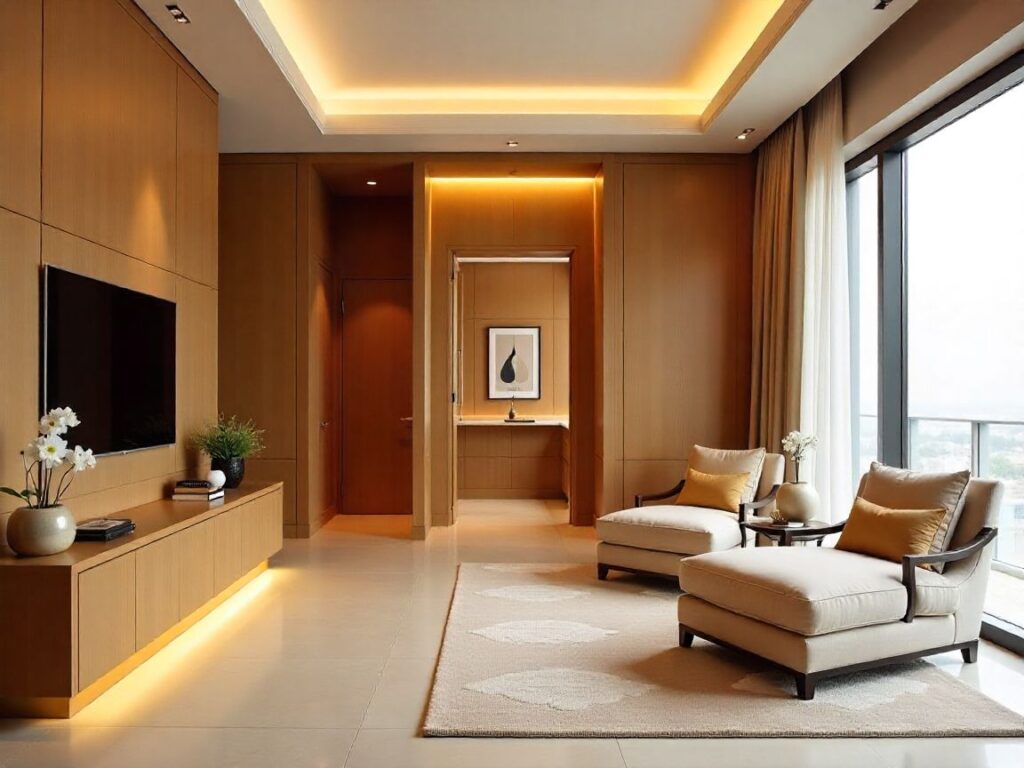
Refined stone, engineered surfaces, and custom joinery are now hallmarks of upscale schemes. Veneered wood and solid-surface counters add tactile warmth while metal accents give crisp definition.
Bespoke cabinetry improves function and concealment. Well-coordinated joinery lets wiring and tech hide cleanly behind panels for a seamless look.
Sustainability and operational efficiency
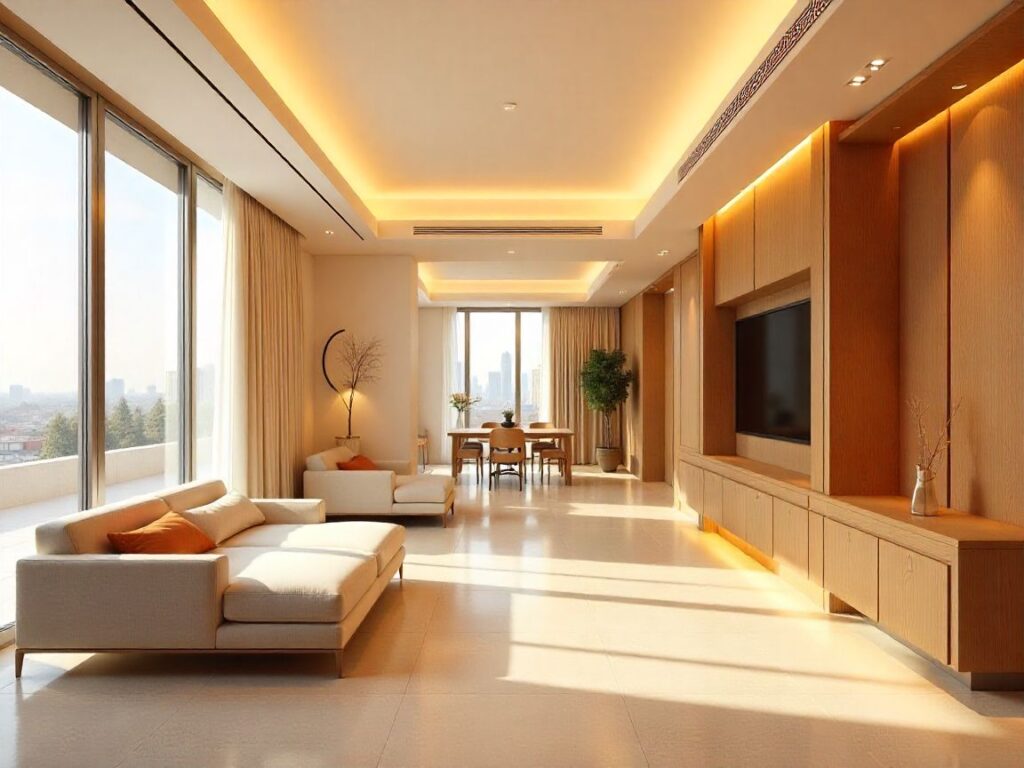
Energy-efficient lighting, occupancy sensors, and HVAC zoning cut running costs and boost comfort. Select finishes for durability to lower maintenance intervals in high-use areas.
Embed sustainability targets—power density limits and HVAC efficiency—into the brief so choices map to measurable outcomes.
Smart home integrations
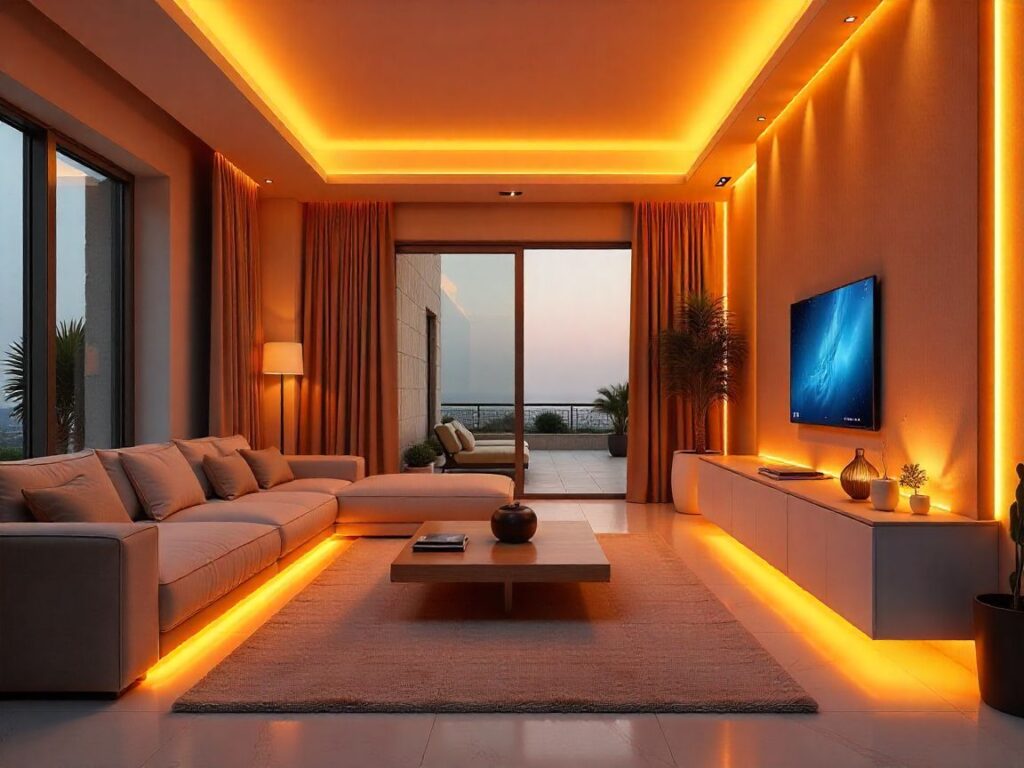
Intelligent control systems now sync lighting, shading, security, and climate into single interfaces suitable for villas and premium apartments.
Early planning for services ensures wiring routes, cabinetry, and equipment zones are coordinated. A clear process—concept, development, documentation, and mockups—reduces rework and supports project success.
- Refined materials + bespoke joinery for lasting aesthetic value
- Efficient lighting, sensors, and HVAC strategies to cut costs
- Unified control systems for convenient operation and future-proofing
- Early services planning to hide tech and simplify installation
Residential vs. Commercial Interiors: Different Needs, One Quality Standard
Homes and workplaces demand different priorities, yet both rely on consistent standards to succeed. Successful projects start with a clear brief that maps user needs, approvals, and a practical plan for delivery.
Residential priorities: comfort, personalization, and long-term value
Residential briefs focus on comfort, privacy, and day-to-day usability. Custom storage and finishes reflect personal taste and support long-term value.
Delta Gulf Overseas stresses licensed, insured operations and transparent pricing to protect clients during renovations and refits.
Commercial priorities: brand experience, code compliance, and durability
Commercial schemes emphasize brand experience, circulation, and hard-wearing materials that meet authority and landlord rules. Documentation and on-site supervision keep performance consistent.
- Sequence: surveys, concept sign-offs, mockups, and pilot areas to limit risk.
- Plan for maintenance and lifecycle so replacements and cleaning are practical.
- Adjust documentation depth and stakeholder coordination by typology without lowering overall quality.
Interior Designers in Muscat: What Sets the Capital’s Firms Apart
Muscat’s firms give projects an edge through deep supplier networks and rigorous technical documentation. This advantage shows up in faster sampling, clearer timelines, and fewer on-site surprises.
Specialist trades and supply chain access are nearby. Fabricators for bespoke joinery, custom metalwork, and feature walls sit close to the city, which speeds mockups and quality checks.
Access to specialized trades, MEP expertise, and premium finishes
Local teams pair architects and designers with MEP coordinators to integrate ceilings, lighting, small power, and ELV systems cleanly. Creative Fox provides detailed shop and MEP drawings, while Mashhad Oman fields an integrated team that aligns planners and architects.
- Proximity to finish suppliers enables consistent quality control and faster sample cycles.
- Experienced engineers reduce clashes with reflected ceiling plans and DB schedules.
- Capital teams handle approvals, logistics, and sequencing for malls, towers, and hotels with greater predictability.
- Vetted subcontractors deliver precision work, keeping bespoke joinery and metal details on program.
For clients the result is clear: a skilled team that coordinates procurement and technical documentation so the project can move from brief to completed work on schedule.
Top Interior Design Companies in Oman: Spotlight on Muscat Leaders
A short list of Muscat-based companies helps clients match scope, schedule, and budget to a capable team.
Creative Fox, Mashhad Oman, and Delta Gulf Overseas lead the market with integrated delivery and rigorous documentation. Each firm brings a clear strength: photorealistic renders and fit-out execution, multidisciplinary planning, or end-to-end project management.
Two other reputable Muscat-based firms round out a practical shortlist when you need fast-track approvals or deep trade networks. Look for groups that combine multidisciplinary teams with strong procurement and supplier access.
- Visualization prowess and shop drawings that reduce on-site changes.
- Joinery craftsmanship and bespoke metal works for lasting finishes.
- Coordination of MEP and services to keep projects on time and on budget.
- Portfolio alignment so clients map projects to each company’s proven typologies.
- Transparent proposals that show scope, exclusions, and delivery milestones.
In the next sections we profile each firm in detail so clients can compare solutions and teams against project goals.
Creative Fox: Fit-Out Expertise and 3D Visualization in Oman
Creative Fox pairs fast-fit execution with high-fidelity visuals to help clients approve concepts before work begins. Their team blends fit-out know-how with photorealistic renders so stakeholders see the final view early in the process.
Capabilities
Fit-outs and bespoke joinery include ceiling systems, flooring, veneered wood, solid surface counters, and custom furniture layouts. Feature walls and customized metal works create focal points that raise perceived value.
Technical depth
Documentation covers architectural drawings, elevations, sections, and detailed joinery packs. MEP plans include reflected ceiling plans, lighting and small-power layouts, DB schedules, sprinkler and fire alarm layouts, HVAC, water supply, drainage, ELV, and gas.
- Visual-first delivery: photorealistic renders align expectations before mobilization.
- Fabrication alignment: shop drawings, material schedules, and furniture layout sync fabrication with site requirements.
- MEP coordination: integrated plans reduce clashes and speed installation.
- Retail to hospitality: signage, shop front, and detailed finishes suit retail, corporate, and hospitality projects.
For clients with clear requirements, Creative Fox offers a single source that ties concept visuals to construction-ready documents, improving cost control and finish quality across the project lifecycle.
Mashhad Oman: Multidisciplinary Team Delivering Client-Centered Design
Mashhad Oman’s multidisciplinary approach pairs technical expertise with client-led priorities to speed delivery. The studio aligns architects, planners, and creative staff so early decisions are practical and measurable.
Architects, designers, and planners aligned to client requirements
A single coordinated team works from brief to handover so requirements translate into clear frameworks and construction-ready documentation. This reduces ambiguity at tender and on site.
The studio blends architects and interior specialists with planners to resolve structural, services, and finish interfaces early. Practical detailing and site coordination protect the program and limit rework.
- Collaborative workshops and option studies that bind stakeholder expectations and speed approvals.
- Pragmatic documentation that links concept sketches to shop drawings and installation sequences.
- Approach tailored for brand-driven and hospitality schemes where guest flow and operations must co-exist.
By centering clients in every review and using an integrated team model, Mashhad Oman improves risk control and overall project success.
Delta Gulf Overseas: Renovation-Driven, Client-Focused Interior Solutions
For clients who need reliable turnarounds, Delta Gulf Overseas brings renovation expertise and hands-on management. Their approach balances client consultation, practical site supervision, and clear deliverables so refits run smoothly and predictably.
Consultation to project management with personalized design plans
Personalized plans start with a site review and a short program of works. The team translates a space brief into material proposals, phasing, and a transparent schedule that reduces downtime.
Residential, commercial, hospitality, and turnkey solutions
Delta Gulf Overseas offers full-home and commercial renovations, bespoke furniture, and turnkey handovers. They are licensed and insured and follow local codes and permit requirements to lower risk for landlords and tenants.
- Renovation strength: keep operations, budgets, and timelines on track.
- Transparent pricing: clear fees with no hidden costs for easier approvals.
- Project delivery: coordinated teams that handle procurement, trades, and site management.
- Trend-aware: their staff support designing with current trends while delivering what was shown in the view stages.
How to Choose the Best Interior Design Company in Oman
Start selection by verifying licenses, sample work, and a realistic program that maps approvals to milestones. A clear shortlist reduces risk and sets expectations for cost, scope, and timing.
Shortlisting criteria
Match portfolio relevance to your typology and complexity. Request three case studies with site photos and references to confirm workmanship.
- Verify trade licenses and insurance to avoid compliance problems.
- Check authority experience for permits and mall rules before awarding any contract.
- Confirm transparent pricing and warranty terms to limit surprises.
Process alignment
Expect a robust plan that outlines the concept, FF&E lists, and a tracked program with milestone approvals. Ensure MEP coordination notes and wiring zones are included early.
Quality assurance
Look for shop drawings, material schedules, and mockups to lock finishes and tolerances before fabrication. Photorealistic view packages and sample boards validate aesthetics and lighting effects.
- Insist on site supervision staffing plans and snagging procedures.
- Prefer firms that deliver full shop and MEP drawings—Creative Fox is an example of this capability.
- Delta Gulf Overseas highlights licensed, insured status and end-to-end management—use this as a selection benchmark.
Services and Capabilities to Look For in Oman’s Interior Firms
A reliable firm pairs clear concept work with technical packages that keep a project on schedule and within budget.
Concept, space planning, and photorealistic views
Concept packages and space diagrams align stakeholders before cost commitments. They show zoning, circulation, and furniture placement so teams price and sequence work with confidence.
Photorealistic view deliverables translate intent into measurable specs. Suppliers and contractors use these to match finishes and lighting expectations.
Joinery, material finishes, and signage
Shop drawings and joinery details ensure furniture fabrication matches tolerances and installation windows. Complete material schedules should list performance, maintenance, and warranty data.
For retail and hospitality, include signage and shop-front details to meet brand needs and authority checks.
MEP coordination and single-set delivery
Require reflected ceiling plans, lighting, small power, HVAC zoning, fire and ELV layouts. These reduce clashes and support compliance.
- Clear concept packs to fix scope early
- Photorealistic views to reduce ambiguity
- Shop drawings for accurate furniture build
- Consolidated coordination set combining architectural, joinery, and MEP layers
Planning Budgets and Timelines for Interior Projects
A successful project pairs transparent fees with phased approvals and tight procurement control.
Budgets scale with scope intensity. Built-ins, bespoke metals, and systems integration drive cost up. Site access, landlord rules, and logistics add to time and expense.
Scope, size, and complexity: how they impact costs and schedules
Depth of documentation reduces surprises. Detailed shop and MEP packs—like those used by Creative Fox—improve procurement accuracy and limit variation orders.
Key timeline drivers include authority approvals, long-lead materials, MEP coordination, and the sequencing of wet works, ceiling closures, and joinery installation.
- Scale your budget: factor built-ins, bespoke metalwork, and tech systems into early estimates.
- Phased commitments: concept sign-off, technical set, and mockups protect cash flow and quality.
- Lock finishes early: securing critical finishes and lighting cuts lead-time risk.
- Manage logistics: clear site rules and after-hours policies compress schedules in live environments.
Delta Gulf Overseas’ emphasis on transparent pricing helps clients avoid hidden costs and keeps timelines predictable. Use staged approvals and vendor lead-time checks to keep a project on budget and on time.
Smart and Sustainable Upgrades for Omani Spaces in 2025
Small technical choices—lighting scenes, ELV routing, and HVAC zoning—deliver outsized operational gains. Clients can ask for clear proposals that turn sustainability goals into measurable outcomes. Focus on options that reduce energy use and simplify maintenance.
Lighting, ELV, and HVAC strategies
Specify layered lighting with dimming and scene controls to save energy and improve visual comfort across the space. Include color temperature and fixture schedules in the proposal so the final view matches expectations.
Require ELV integration for security, networking, and AV. Ask that cable runs stay hidden in joinery and ceiling voids, with labelled trays and access panels for future service.
Choose HVAC zoning and smart thermostats to cut cooling loads in hot months. Zoning reduces wasted conditioning and lets occupants tune comfort per zone.
Durable finishes and handover checks
Recommend flooring systems by use class and pair them with solid surface counters and veneered wood to balance durability and low maintenance. Ask suppliers for performance data and warranties.
Request sample mockups and photorealistic view checks before ordering to validate grain direction, joint detailing, and color temperature under real lighting.
- Layered lighting: dimming + scenes for savings and comfort.
- ELV routing: concealed cabling, labelled trays, and AV/security integration.
- HVAC zoning: smart thermostats and occupancy control to cut bills.
- Durable finishes: match flooring to use class; solid surface counters and veneers for easy upkeep.
- Handover: mockups, view validation, maintenance plans, and spare-materials schedule.
Include maintenance plans and spare materials in handover documentation so finishes last longer and replacements match the original batch. These simple steps help proposals become practical upgrades with measurable value.
Future Outlook: Where Modern Omani Interiors Are Heading
The next wave of projects will pair interoperable tech with artisanal details to elevate comfort and cultural continuity. Expect a clear move toward systems that make buildings smarter without erasing local character.
Tech-enabled spaces that preserve cultural identity
Controls and sensors will integrate into a single platform, improving comfort and cutting energy use across varied spaces. Early coordination of wiring and ELV keeps installation tidy and serviceable.
Craftsmanship will return in contemporary forms. Local makers will produce refined joinery, carved screens, and metalwork that read modern yet rooted in tradition with a sense of elegance.
- Data-led specs: material health, embodied carbon, and lifecycle metrics will guide selections.
- Closer collaboration: architects, interior specialists, and MEP engineers will deliver holistic user experiences.
- Visualization and coordination: Muscat teams with strong render and shop-drawing workflows will set the pace for high-performance fit-outs statewide.
Overall, future projects will balance measurable sustainability gains with cultural continuity. That mix will define successful schemes and set new benchmarks across the region.
Conclusion
Delivering a great space requires early choices that balance cultural cues, performance targets, and clear documentation. Keep the brief tight so teams can turn intent into a staged program with measurable milestones.
The best interior design company for your brief will show portfolio relevance, valid licenses, transparent pricing, and full technical deliverables. Those items reduce surprises and make procurement predictable.
Shortlist interior designers in Muscat that combine visualization, joinery craftsmanship, and MEP coordination to de-risk delivery. Ask for a program, clear inclusions/exclusions, and a sample/mockup schedule to protect time and budget.
For quick answers, consult the FAQ covering costs, timelines, scope, and approvals. Get in touch to compare briefs and find the right partner for your project in Oman.
FAQ
What services do top firms offer for home and commercial projects?
Leading companies provide concept development, space planning, FF&E selection, bespoke joinery, shop drawings, MEP coordination, on-site supervision, and turnkey fit-out delivery to ensure cohesive results for both residences and commercial spaces.
How do Omani cultural elements get incorporated into contemporary spaces?
Designers use majlis layouts for hospitality, mashrabiya-inspired screens for shading and privacy, and traditional motifs—geometric patterns and Arabesque carving—combined with modern materials and lighting to balance heritage and modern living.
How should I budget and schedule a renovation or new build?
Budget and timeline depend on scope, size, and complexity. Prepare a clear brief, allow time for concept and shop drawings, factor procurement lead times for bespoke items, and include contingency for MEP coordination and site works. Typical residential projects run longer when custom joinery and permits are involved.
What sustainability and smart-home options are practical in 2025?
Practical upgrades include energy-efficient lighting, smart climate and security systems, HVAC optimization, ELV integration for controls, durable low-maintenance finishes, and materials with long life cycles to reduce maintenance and operating costs.
How do I choose the right firm in Muscat or nationwide?
Shortlist firms based on portfolio relevance, trade licenses, client references, transparent pricing, and experience with MEP coordination. Confirm they produce detailed shop drawings, material schedules, and offer reliable site supervision to protect quality and timelines.
What distinguishes residential from commercial projects in planning?
Residential work prioritizes comfort, personalization, and long-term value. Commercial projects emphasize brand experience, code compliance, durability, and operational flow. Both require rigorous quality assurance but different material and performance priorities.
Can I get photorealistic renders before construction starts?
Yes. Many firms include 3D visualization and photo-realistic renders as part of the concept stage so clients can review finishes, lighting, and spatial layout before signing off on construction-ready drawings.
What should I expect from the MEP coordination process?
Expect collaborative reviews with HVAC, lighting, and power layouts, fire-fighting and ELV coordination, clash detection, and revisions to architectural and joinery details to ensure systems integrate smoothly without aesthetic compromises.
Are bespoke joinery and custom metal works worth the investment?
Custom elements provide tailored functionality, unique aesthetics, and higher perceived value. When specified and executed with quality materials and accurate shop drawings, they outlast generic alternatives and enhance long-term appeal.
How do firms ensure quality during fit-out and installation?
Quality assurance relies on detailed shop drawings, material schedules, certified suppliers, periodic site inspections, and clear punch-list procedures. Reputable teams maintain tight coordination between trades to avoid rework and delays.
What timelines are typical for a full residential fit-out?
Timelines vary, but a full fit-out with custom joinery and MEP works often takes several months. Early design finalization, timely approvals, and coordinated procurement shorten the schedule. Discuss milestones and penalties for delays in your contract.
How do companies price projects—fixed fee or percentage?
Pricing models include fixed-fee proposals for defined scopes, percentage-based fees tied to construction costs, or time-and-materials for ongoing consultancy. Request a clear breakdown of fees, allowances for FF&E, and change-order processes before engagement.