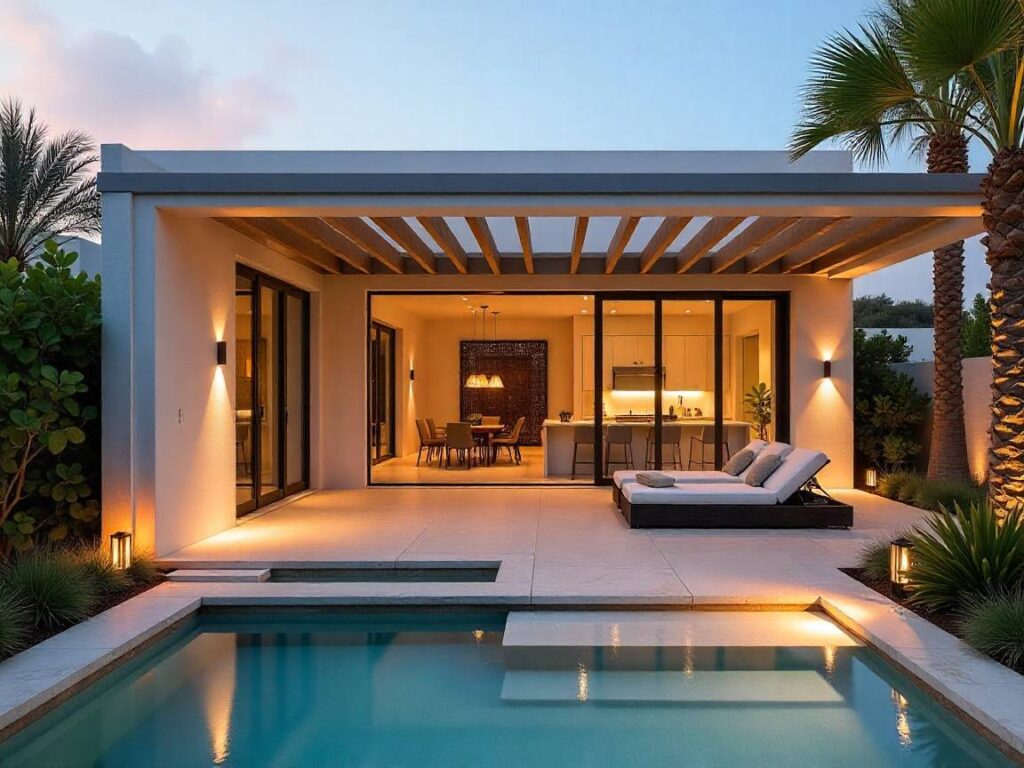
The sun, sea, and sand shape outdoor spaces. This guide helps make your patio cool, bright, and strong. It shows how to create a stylish patio that feels like a resort, with less work.
We focus on designs that block heat and glare. Options include pergolas, awnings, glass enclosures, and gazebos. These keep your patio cool and protect it from the sun.
Choosing the right materials is key. Use aluminum pergolas and stainless steel hardware to fight rust. Low-E glass cuts heat while keeping views clear. Outdoor fabrics like Sunbrella stay colorful and dry, making upkeep easy.
Good design means planning for privacy, lighting, and utilities. Add fans, misters, and dimmable LEDs for comfort. Plan for gas, water, and power for an outdoor kitchen or water feature. These ideas make your patio better and support smart home upgrades.
Patio Extension Planning for Gulf Climates: Heat, Humidity, and Sand
Start by carefully looking at the site. A good patio design for Gulf climates should follow the sun path. It should also use nearby walls for shade and place heavy things to block the west.
Use wind maps from NOAA or local weather stations to plan. This helps create a patio that stays cool naturally. It also keeps sand from drifting.
Site orientation and wind patterns for natural cooling
Place seating to face the north or east to avoid late-day heat. Make sure openings are aligned with the summer breeze for better air flow. If you’re near tall neighbors, place your patio to catch cooler air.
Material selection for UV, salt, and corrosion resistance
Choose materials that can handle salty air and lots of UV. Powder-coated aluminum is good because it doesn’t chalk or fade. Use 316 stainless fasteners to prevent rust.
Porcelain pavers and composite decking like TimberTech AZEK are great for hot and gritty areas. For fabric, pick UV- and mildew-resistant ones like Sunbrella or Serge Ferrari.
Shading strategies for midday sun and glare control
Use different shades to block glare and keep surfaces cool. Overhangs and adjustable louvers or awnings are good for changing light. Add vertical screens on the west and southwest sides.
Apply Low-E coatings or UV films on nearby glass to lower SHGC. This helps keep your patio cool without blocking views during a backyard renovation.
Permits, HOA rules, and local building codes to consider
Check setbacks, height limits, and finish options before starting. In areas prone to hurricanes, make sure your design meets wind standards. Get inspections for any patio work.
Keep grills away from walls and use GFCI/AFCI protected utilities. Make sure your design meets HOA rules to pass the first time.
Design Principles for a Comfortable Outdoor Living Space
Start with making people comfortable. First, add shade. Then, make sure air flows well. Lastly, control heat.
A modern patio should have different areas for cooking, relaxing, and eating. Paths should not go near hot grills. Service areas should be clear.
Make paths wide and straight. This helps people move easily without getting stuck.
Set goals for comfort and check them. Aim for a temperature of 68–82°F. Air should move at 100–200 fpm.
Use fans like Hunter or Big Ass Fans for this. Keep floors cool by using light finishes and reflective pavers.
For evening, aim for 50–150 lux on tables and 10–30 lux for a calm feel.
Use natural tools first, then cool things down. Choose light-colored stones and decking. Add screens and pergola louvers to block glare and let breezes in.
A small fountain adds cooling and sound. This makes the patio feel good all day.
Choose strong systems that can handle weather and wear. Use fans and lights that are safe outside. Pick easy-to-clean fabrics for seats.
Smart controls let you adjust lights and air. This makes the patio great for any time, from family fun to evening gatherings.
Plan for easy upkeep and flow. Grill areas should be downwind. Keep prep areas near the grill and paths clear for dishes.
Use drainage under edges with slight slopes. This keeps rain away without puddles. A small space can become a rich outdoor area with the right materials and design.
15 Stylish Patio Extension Ideas for Gulf Homes
- Shaded Pergola Patio Extension
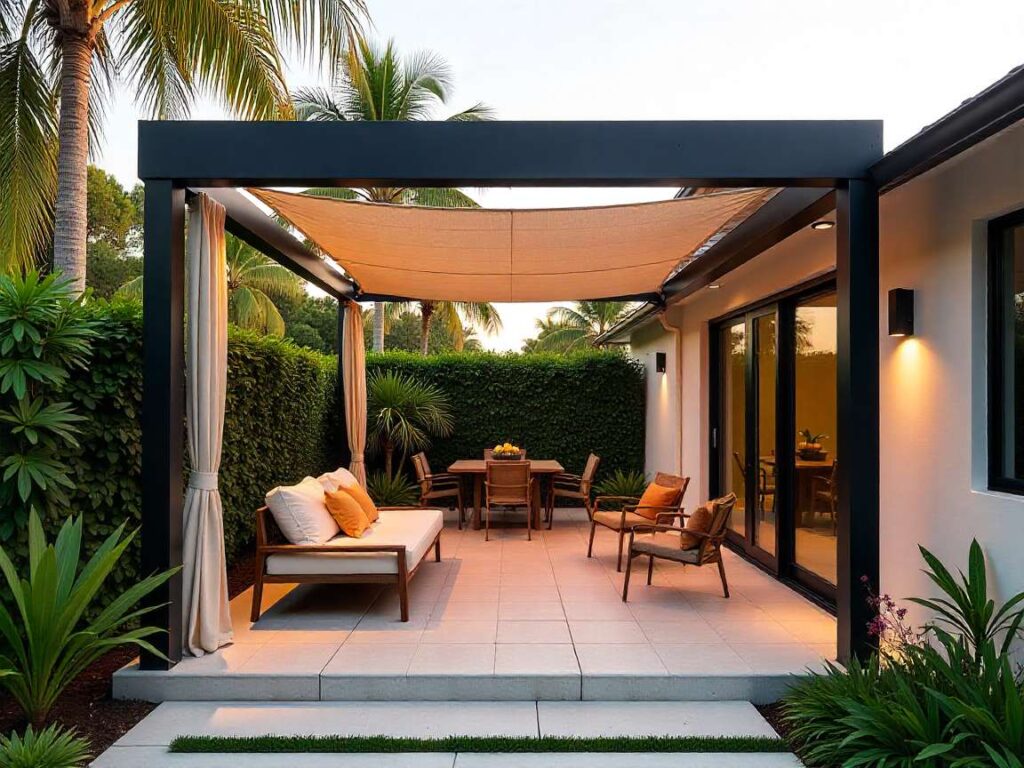
A pergola patio extension for gulf homes needs to cool, last long, and look good. In salty air and strong sun, making smart choices is key. Here are some ideas for a shaded patio extension that’s comfy and easy to care for.
- Powder-coated aluminum from brands like Renson and StruXure is great for the coast. It doesn’t rust and needs little care. Timber like Accoya or Ipe adds texture and strength when sealed.
- Composite beams are easy to keep up and look good. They’re perfect for a pergola patio extension where time is precious.
- Choose materials based on how you’ll use them. Aluminum is best near pools. Timber is great for special builds. Composites are easy to care for all year.
- Deciduous vines like bougainvillea cool the air and look nice. They need water and pruning. Fabric canopies like Serge Ferrari Soltis block UV rays and stay tight in wind.
- Plants add beauty and smell. Fabrics offer clear shade and are easy to clean. Mixing vines and fabric creates layered shade.
- Plan for wiring and water early. Use hidden conduit and strong backing for fans. Add misters to cool without wet floors. Use lights to define spaces.
- Side screens or panels block sun and add privacy at night. With fans, misters, and lights, your patio stays cool and inviting.
- Outdoor Majlis-Style
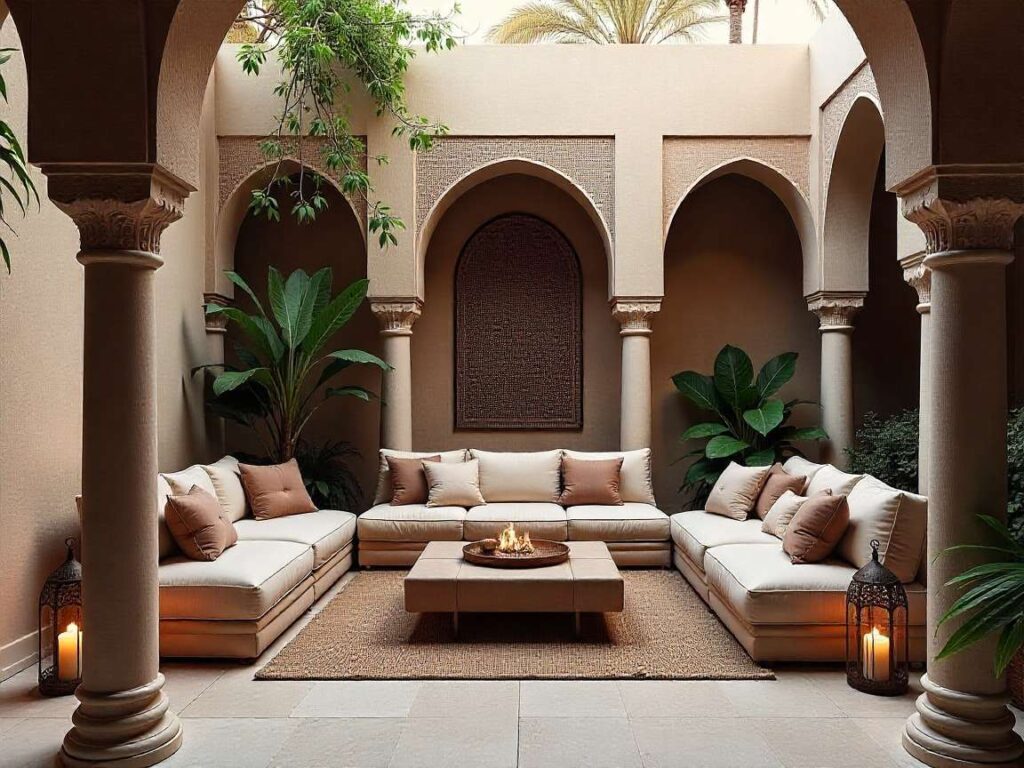
Make your outdoor space cozy with a layout perfect for U.S. yards. It combines old-world charm with modern patio design. You get shade, air, and soft comfort.
It also adds stylish touches great for families and guests.
- Low seating, cushions, and textiles for comfort
Begin with low, easy-to-move seating for chats. Pick deep cushions in Sunbrella or Perennials fabrics. They’re light, dry fast, and easy to clean.
For more room, add floor cushions for movies or tea. Use a mix of sand tones, indigo, and terracotta for color. This look is timeless and easy to update.
- Privacy screens and arches inspired by Gulf design
Surround your space with screens inspired by Gulf arches. They’re made of aluminum or laminate. They block glare and keep breezes flowing.
Place seating in the shade and add ceiling fans for cool air. Your patio will be stylish and comfy all summer.
- Rugs, lanterns, and coffee tables for a welcoming feel
Put down rugs to mark areas and prevent fading. Hang metal lanterns with LED lights for cozy light. Place low tables in the middle for snacks and drinks.
These details make your patio inviting without being too busy. They work in small or big spaces, making your outdoor area warm and welcoming.
- Retractable Awning Patio Cover
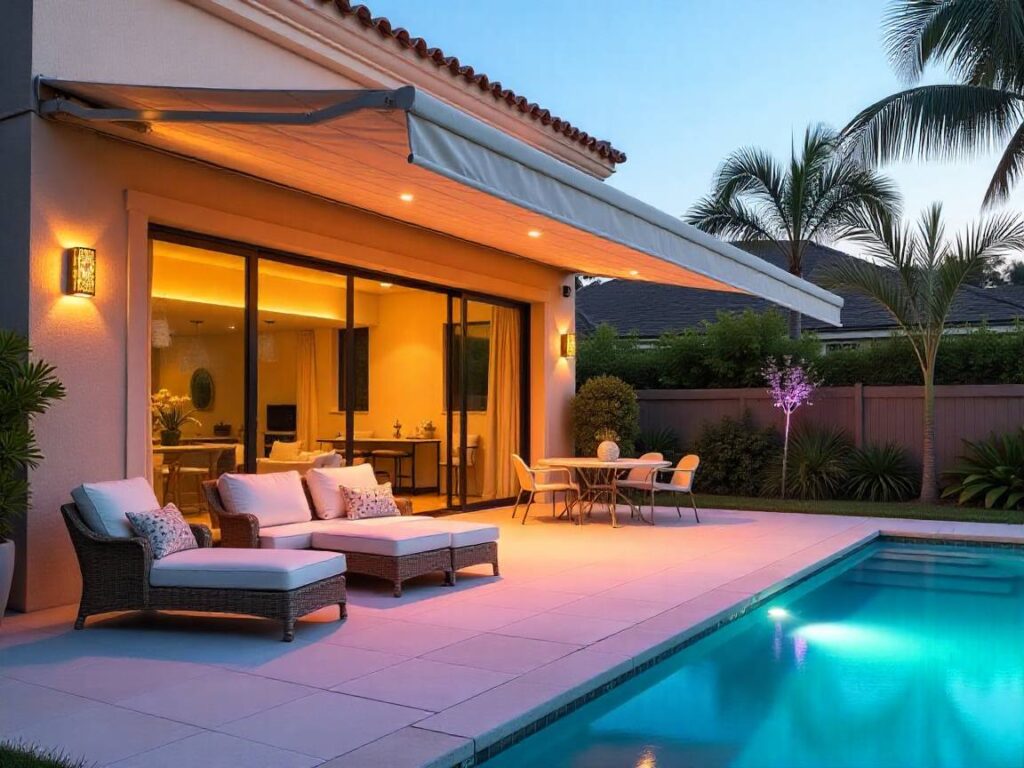
A motorized retractable awning makes a patio extension flexible. It’s perfect for Gulf heat. Somfy motors work with wind and sun sensors to open and close.
Choose from solution-dyed acrylic or PVC-coated polyester fabrics. They resist UV rays, mildew, and are easy to clean. A full cassette design keeps the fabric and arms safe when closed.
Coastal zones need careful engineering. Make sure the wind rating matches local gusts. Use a 14-degree slope to keep rain off.
Anchor the awning into the building’s frame, not just the siding. Use stainless or hot-dip galvanized fasteners to fight corrosion. This makes the awning last through salt air and storms.
Think about the sun’s path in the Gulf. Use drop-down valances and side screens to block glare. Add heaters or fine-mist lines for cooler weather.
Match the awning size to your furniture. Make sure it shades the whole area. Leave space for moving around and serving food.
Finish with details that look good and last. Use neutral colors with limestone, porcelain, and teak. Add LED light bars for evening light.
With careful design, a covered patio looks like part of the house. It works well with the Gulf’s weather.
- Glass-Enclosed
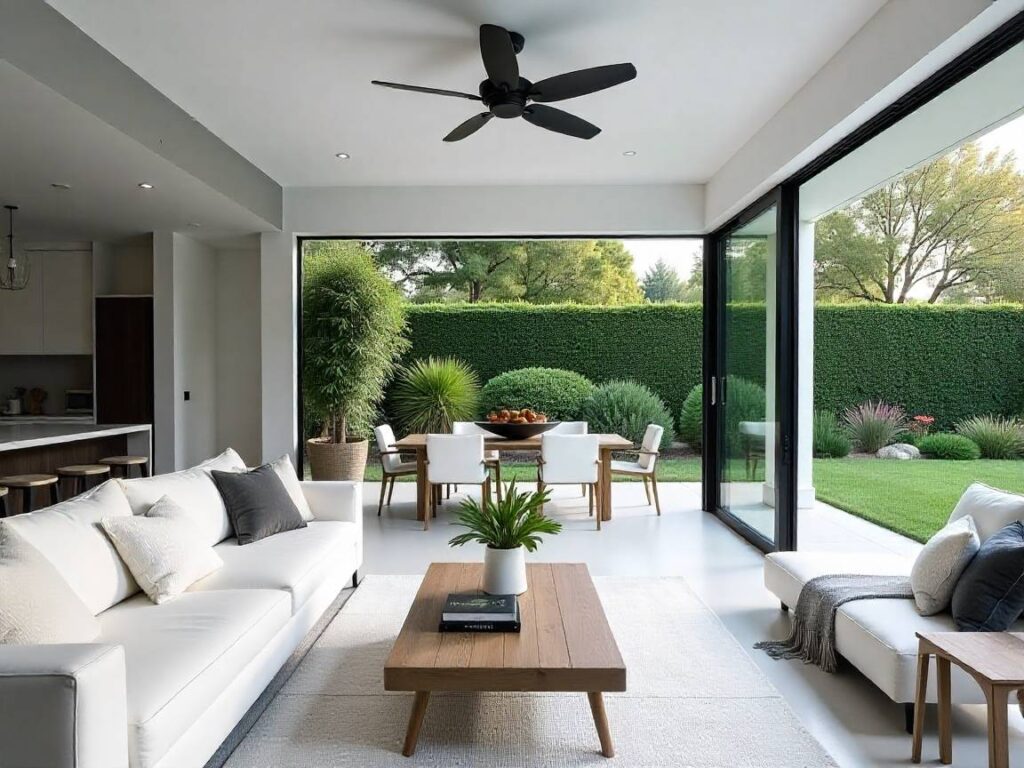
A glass enclosure makes a porch smart and big. It keeps the light and views open. This design is perfect for sunny places and fancy homes.
- Frameless sliders versus bi-fold systems
Frameless sliders are slim and easy to use. They come from brands like NanaWall and Sky-Frame. They are great for moving around safely.
Bi-folds open wide for big events. They let in lots of air and light. Choose what you need for your space.
- Low-E glass and UV films for thermal comfort
Low-E glass keeps things cool and clear. It’s made by Guardian and Saint-Gobain. It also keeps the sun’s heat out.
In sunny places, add shades to keep it cool. In fancy homes, use roof overhangs to block sun.
- Transitioning to indoor-outdoor living year-round
Frames and sills keep things dry and comfy. Fans and dehumidifiers help in hot weather. Bug screens keep air fresh.
This setup is perfect for any time of day. It makes your outdoor space cozy and inviting. It’s great for any climate.
- Wooden Deck
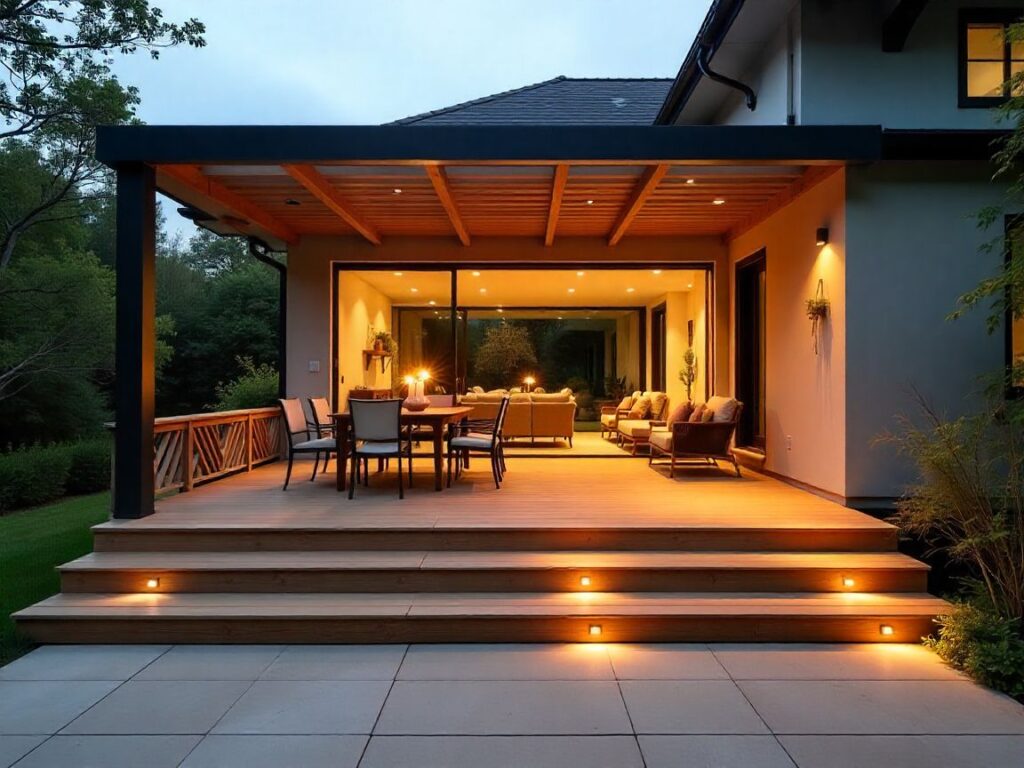
A wooden deck can make a patio extension cool and durable. In hot, humid areas, pick thermally modified ash or Ipe. Or go for capped composites like Trex Transcend and Timber Tech AZEK. These options resist swelling, fading, and stains, making your backyard renovation last long and add value.
Think about airflow and drainage from the start. Make sure there’s space between boards for air to flow. Use a drainage plane or adjustable pedestals over slabs to keep things dry. Use stainless steel fasteners, like 316 grade in coastal areas, and hidden fasteners for a clean look.
Surface temperature is important. Light-colored decking reflects sun and keeps feet cool. Add shade from a pergola or awning to reduce glare and extend use into the day. This makes your patio extension safe and comfortable.
Safety and night use are key. Add low-voltage step lighting to mark edges and stairs without glare. Install code-compliant railings that match your patio’s style. Route wiring in safe channels to cut down on upkeep. This creates a space for gatherings, quiet mornings, and family routines.
Finish details are important. Choose stains or capped boards that handle UV and salt well. Align boards with breezes for faster drying. Keep clearances around walls for expansion. With smart choices and careful details, a wooden deck makes your outdoor space better and supports a lasting backyard renovation.
- Stone or Marble Flooring Patio Extension
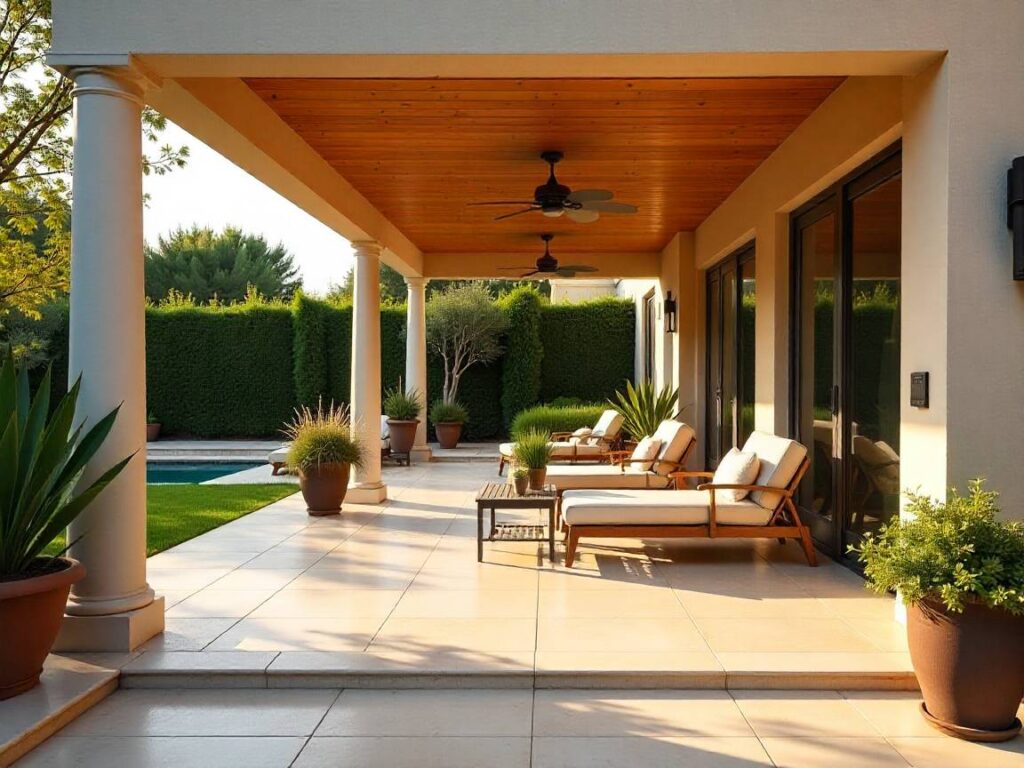
Make your outdoor patio better with stone or porcelain. It keeps your feet cool and is easy to clean. It also looks fancy. This is great for places where it’s hot, wet, and sandy all the time. It meets Dubai’s high standards for lasting and looking good.
- Travertine, porcelain, and marble for heat reflection
Go for surfaces that reflect sun like light travertine, tumbled marble, and porcelain pavers. They help keep the area cooler. Porcelain is perfect for busy spots because it’s easy to clean and doesn’t stain.
Use travertine or marble for relaxing areas. Put porcelain in places where lots of people walk and eat. This makes cleaning easier.
- Non-slip finishes and drainage considerations
Make sure the floor is not slippery with textured or sandblasted finishes. For porcelain, aim for a wet DCOF of at least 0.42. Make sure the deck slopes slightly to drain water and sand.
Where water from the roof falls, add special drains around the edges. This keeps the patio safe and dry after storms.
- Color palettes that resist fading and staining
Choose light colors like pale beiges, creams, and light grays. They reduce glare and hide dirt well. Seal natural stone with a special sealer to protect it from spills and salt without changing its color.
In kitchens and play areas, porcelain’s low absorption keeps it looking new. This supports long-lasting patio design and matches Dubai’s modern style.
- Patio Extension with Outdoor Kitchen
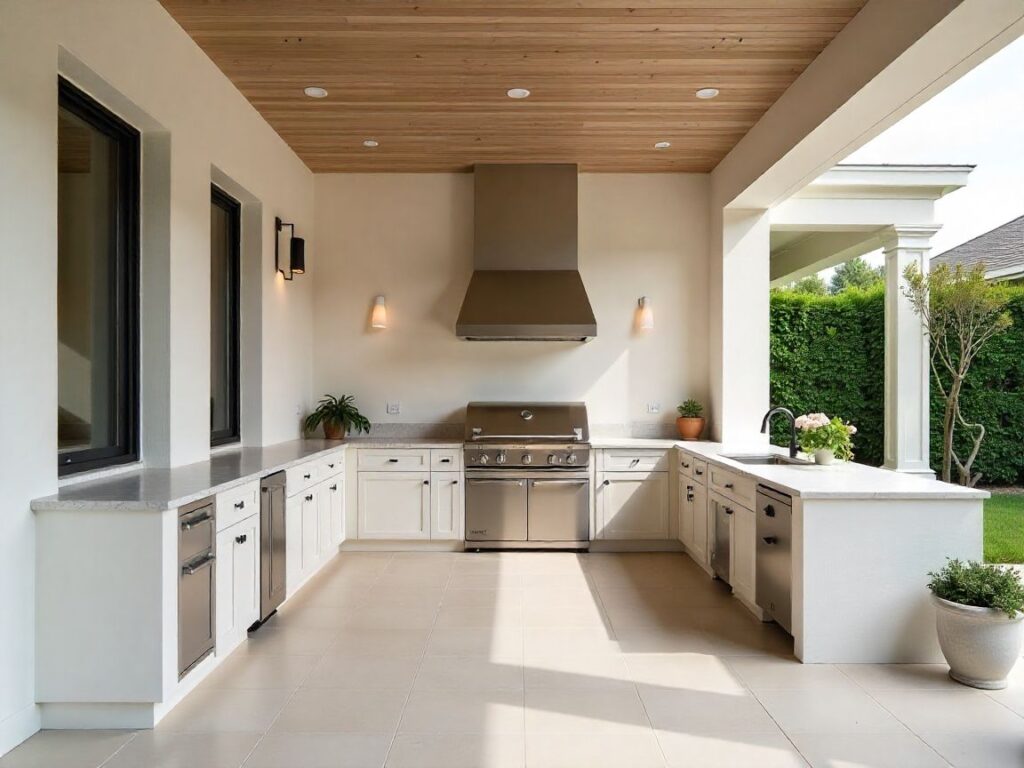
A well-planned patio extension makes cooking and gathering fun every day. Use durable finishes that can handle sun, salt, and heat. Choose materials that are both strong and stylish to boost your home’s value.
- Heat-resistant counters and marine-grade cabinetry
Choose porcelain-sintered slabs like Dekton or Neolith for counters and splash zones. They can handle UV, stains, and heat well. Pair them with marine-grade stainless steel 316 or powder-coated aluminum cabinets from Brown Jordan Outdoor Kitchens.
Use sealed masonry bases for extra strength in coastal air. Keep door gaskets and drawer glides outdoor-rated. Add leveling feet for a perfect install on your new patio.
In sunny areas, light counter colors help keep surfaces cool. Dark toe kicks hide dust and sand well.
- Grill zones, sinks, and beverage centers
Set up work zones: a grill, a prep sink, cold storage, and a beverage center with ice. Brands like Perlick and True offer outdoor refrigerators that stay cool even in hot weather. Add space on both sides of the grill for trays and tools.
Make sure there’s 12–24 inches of noncombustible surface next to the grill. Place heat sources 10–12 feet from flammable structures if needed. This keeps your outdoor dining area safe and efficient.
- Ventilation, utility runs, and safety clearances
Under a roof or pergola, use a vent hood that matches the grill’s size. It should have baffle filters and ducting that blows away from seating. Plan for GFCI-protected circuits, shutoff valves, and accessible gas and electrical runs behind panels.
Group switches for task lights, under-cabinet LEDs, and a dedicated circuit for infrared heaters. This extends your patio’s use into shoulder seasons. Thoughtful utilities and airflow protect finishes, improve comfort, and make your patio a reliable spot for weekend cooking and everyday use.
- Modern Aluminum Pergola with Adjustable Louvers
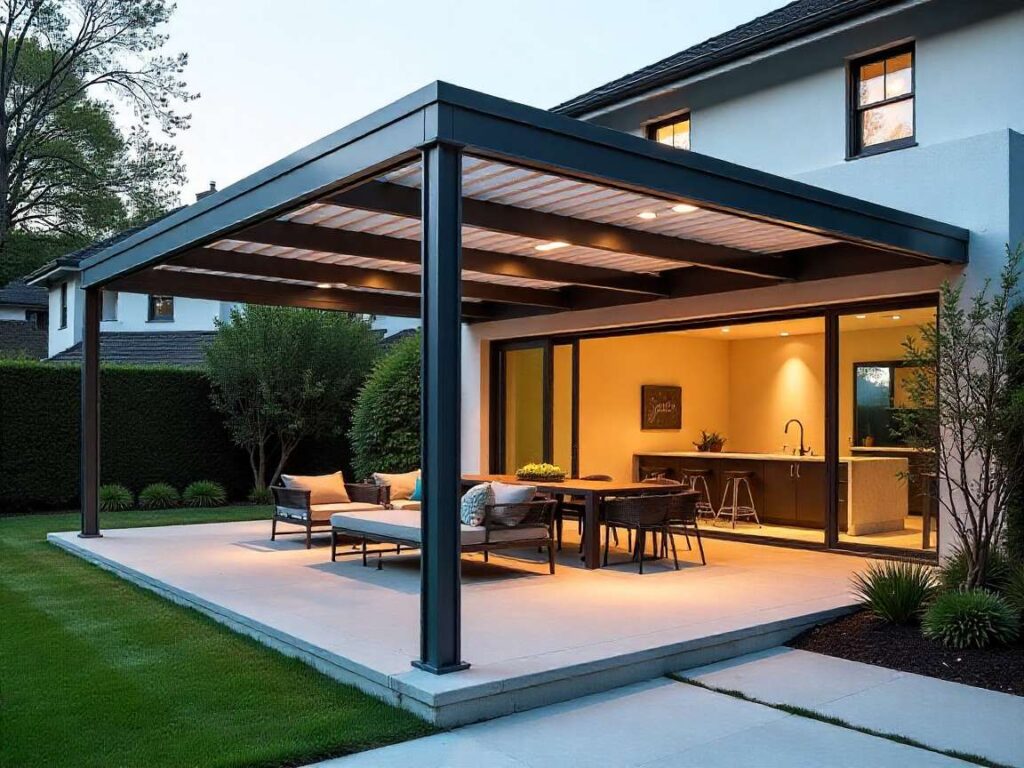
A modern aluminum pergola with adjustable louvers adds precise climate control to an outdoor patio extension. Motorized systems from StruXure, Renson Camargue, and Equinox use extruded aluminum blades. These blades rotate to track the sun, vent hot air, and seal tight in rain.
Integrated gutters move water away from living zones. Wind and snow ratings are selected to match local code for safety and durability.
Side screens, glass infills, or fabric panels create a calm buffer against sand, glare, and cool breezes. Discreet RGBW LED strips set the mood for dining or late-night gatherings. Electric ceiling heaters extend shoulder seasons without bulky propane tanks.
Smart sensors can close louvers at the first drop of rain. This gives a responsive modern patio extension that feels effortless to use.
Engineering details matter in coastal air. Robust footings resist uplift, and concealed wiring keeps lines clean. Coastal-grade powder coatings protect against salt and UV.
The result suits a pergola patio extension for gulf homes. Here, heat, humidity, and corrosion are real factors. Yet, the design stays sleek and low maintenance.
During peak sun, louvers tilt to cast deep, even shade. They cut glare across seating, kitchens, and walkways. As temperatures fall, they open wide for sky views and natural convection.
This turns a shaded patio extension for gcc villas into a breezy retreat. The same framework scales from compact courtyards to expansive terraces. It delivers an outdoor patio extension that blends performance, style, and year-round comfort.
- Patio Extension with Water Features (Fountain or Small Pool)
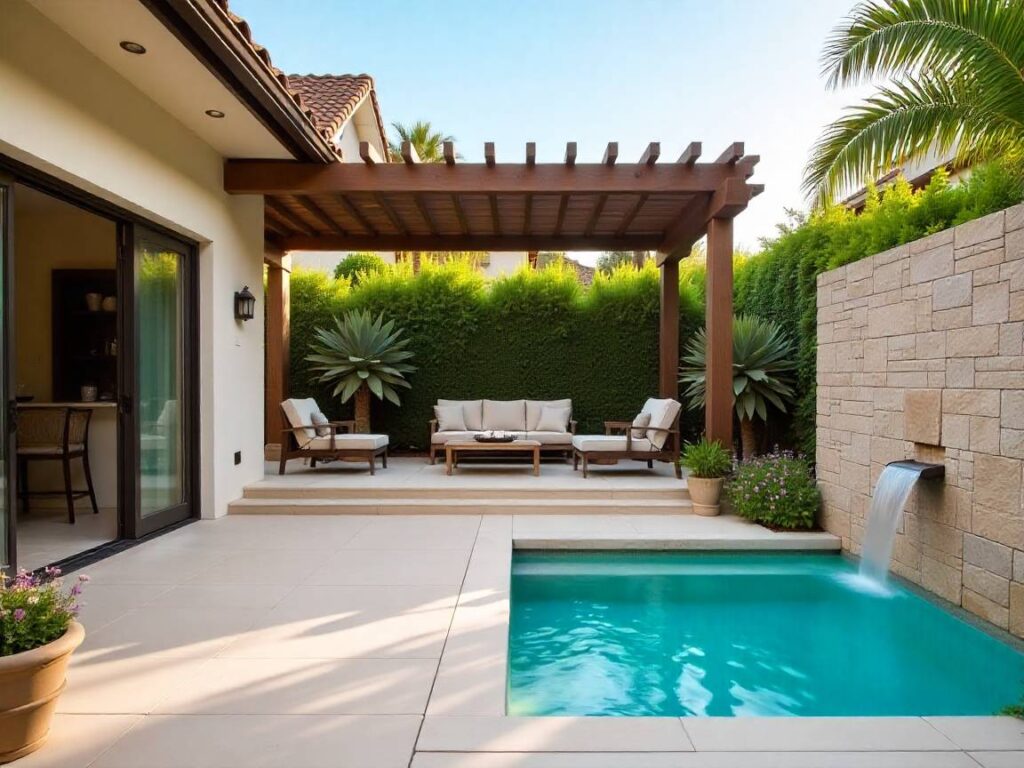
Water makes a hardscape calm and cool. It’s great for a patio in hot coastal areas. Moving water softens glare and brings breezes to your seat.
These ideas work well for small patios too. They don’t take up too much space.
Cooling microclimates with fountains and rills
Shallow rills and wall fountains cool the air. Put them upwind of your seats. This way, cool air blows across.
Use light stone or porcelain to reflect the sun. This keeps the area cool.
Adding a pergola or canopy brings more shade. This makes the area even cooler. Low flows in rills mean less water loss.
Compact plunge pools for tight footprints
Plunge pools are 8 to 12 feet long. They fit small spaces but feel like a resort. Use Hydrazzo or porcelain tile for easy cleaning.
Integrate bench seating for more swim time. It also creates a social spot. A shade frame or umbrella cuts down on heat.
Adding an automatic cover saves water. These changes make small patio extensions stylish and practical.
Pump efficiency, filtration, and maintenance
Choose a variable-speed pump for better flow control. This saves energy. Use a cartridge filter with UV or salt-chlorination for clear water.
Position skimmers to catch debris easily. Use GFCI-protected circuits and follow the National Electrical Code. Smart timers or automation help keep things calm.
- Fabric Canopy Patio Extension for Cooling Shade
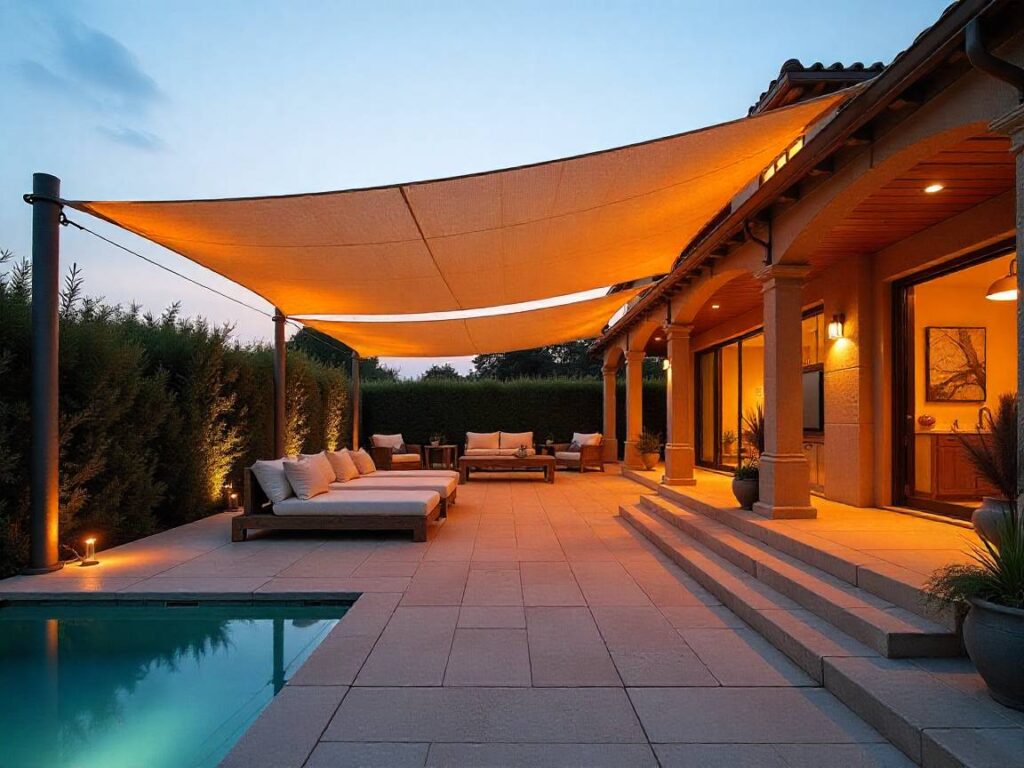
A fabric canopy makes an outdoor patio cooler and breezy. It keeps views open. Sail shades block harsh UV rays but let air flow, perfect for hot Gulf areas and humid coasts.
Multi-sail arrays add drama and depth. They fit well with modern patio designs.
Design the canopy with curves to keep it tight. Use strong marine-grade parts and deep footings to fight wind. Slopes help rain run off quickly, keeping the patio dry.
Go for light colors like sand, ivory, or pale gray. They reflect heat and reduce glare. Quick-release hardware lets you quickly lower the canopy for storms or windy days.
Edge the canopy with soft LED lights for evening use. Add removable panels for winter to keep frost out. This keeps the patio stylish, shaded, and safe.
- Built-in Seating and Cushions
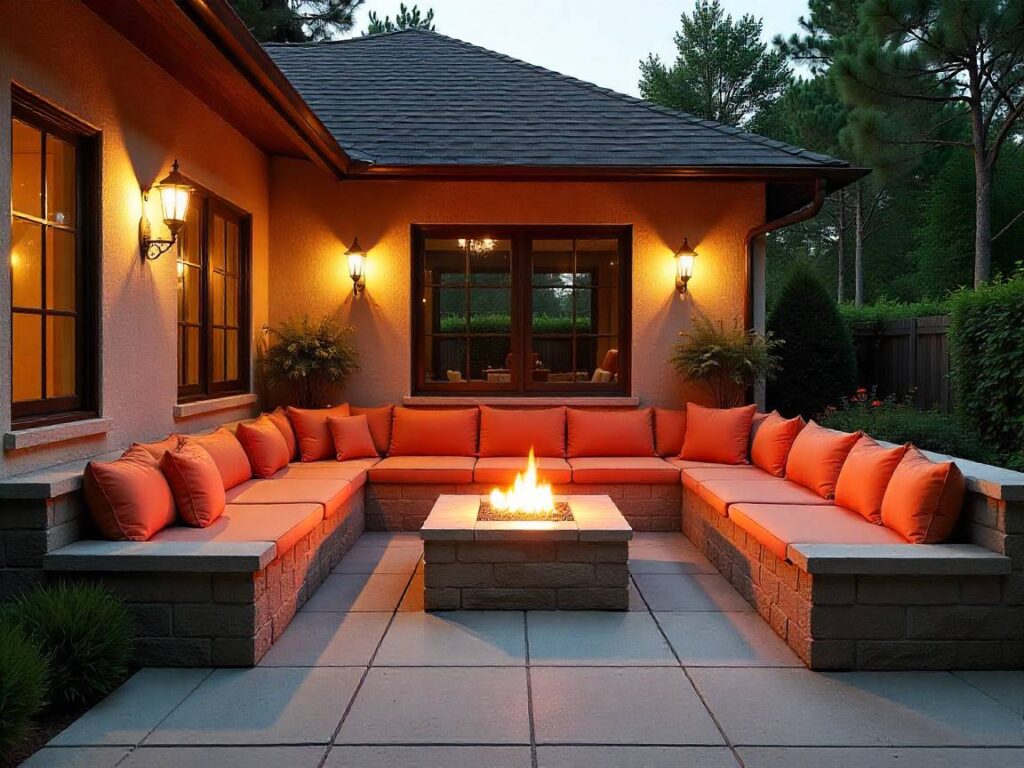
Built-in seating makes a patio extension flexible. It’s great for meals and gatherings. Bench lines define edges and frame views.
Durable finishes add value and keep maintenance simple. This is a smart home improvement.
- Bench walls with hidden storage
Make bench walls in masonry or concrete. Use hinged or lift-off tops for easy access. Line storage with drainage weeps and slots to reduce moisture.
Use stainless-steel hardware from brands like Simpson Strong-Tie. Add rubber bumpers for quiet lids.
Include spaces for cushions, lanterns, and grilling tools. This keeps the patio tidy. Use epoxy coatings and slatted bases in humid areas.
- Weather-resistant upholstery and foam
Choose quick-dry foam for fast rain shedding. Use solution-dyed acrylics from Sunbrella or Perennials for colorfast fabrics. Marine-grade zippers and Velcro brand anchors keep covers tight.
For glare sites, pick mid-tone fabrics that resist fading. Use breathable underliners with mesh bottoms to vent heat.
- Layout tips for conversation and dining zones
Shape benches in U or L to frame fire features or coffee tables. Keep 36 inches clear behind chairs for safe movement. Allow 24 inches per person at dining benches for elbow room.
Use 16-18 inch seat height and 16-20 inch depth for comfort. Set tables at 28-30 inches for leg clearance. This makes the patio extension versatile and practical.
- Patio Extension with Green Wall or Vertical Garden
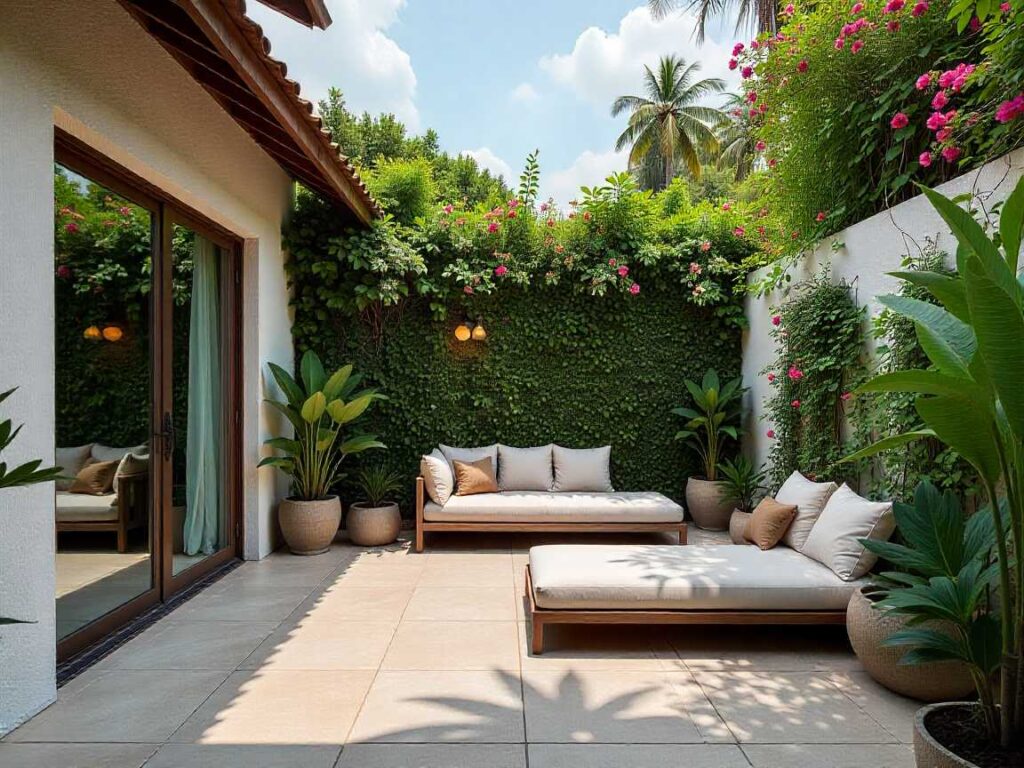
A vertical garden makes a wall come alive with greenery. For a fancy patio, pick modular systems from GSky or Woolly Pocket. Or, use a stainless trellis with heat-tough climbers.
Star jasmine cools the air with its scent. Bougainvillea brings bright colors. Native vines save water and add beauty to your patio.
Put it on west or south sides to block strong sun. This makes your patio a cool spot. It also keeps windows from getting too hot.
In small spaces, a slim trellis saves room. It gives lots of greenery without blocking your furniture.
Use drip irrigation with fertigation for healthy plants. Add root barriers and drainage trays to protect your patio. Stainless hardware and LED lights make your patio look good at night.
Make sure you can get to your plants for care. Keep irrigation lines hidden for a clean look. Plants will thrive and your patio will stay comfy even when it’s hot.
- Luxury Gazebo Patio Extension
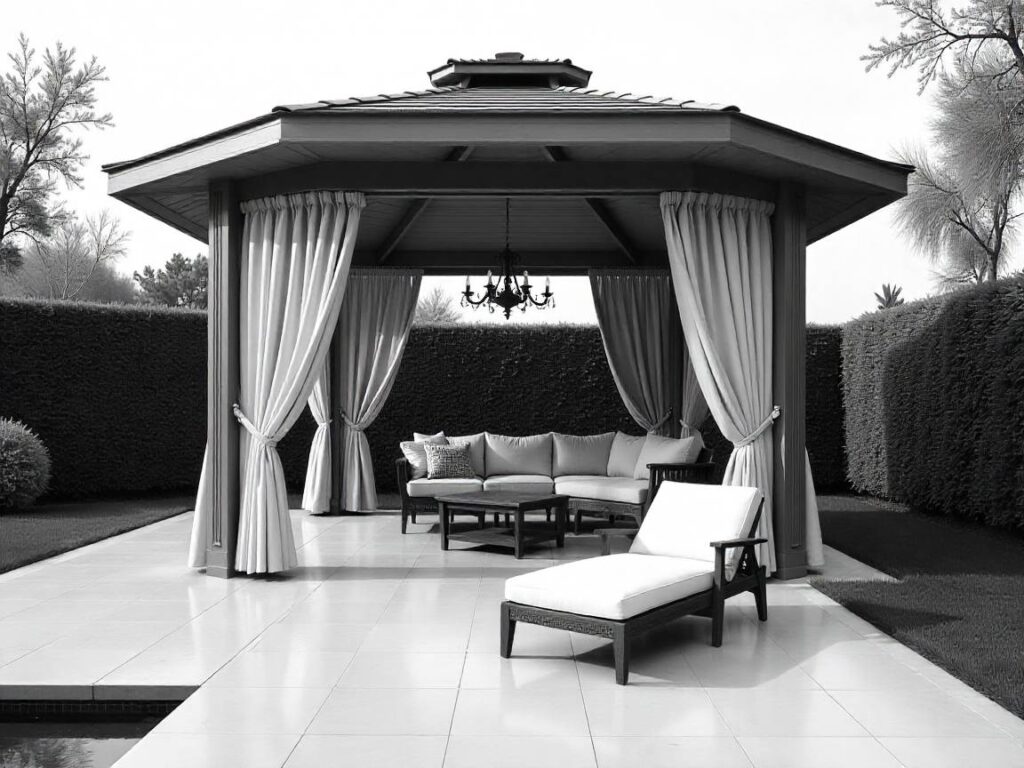
A luxury gazebo turns a patio into a cozy retreat. It offers shade, airflow, and comfort all year. It’s stylish and perfect for outdoor fun without ruining the view.
- Octagonal, pavilion, and cabana-inspired forms
Go for an octagonal shape for balance and views. A flat pavilion roof adds simplicity. Or, pick a cabana for privacy and light control.
Each design fits well in Dubai’s sun and American homes. Add screens and drapes for quick changes from open to private.
- Cladding, roofing, and premium finishes
Choose a standing seam aluminum roof for sharp edges and durability. Cedar adds warmth, and composite columns don’t warp.
Porcelain floors stay cool and easy to clean. Drapes and marine-grade hardware bring a resort feel while lasting long.
- Integrating fans, chandeliers, and smart controls
Put in UL Wet-rated fans for steady air and a damp-rated chandelier for soft light. Smart scenes control lights, shades, and heaters.
Hidden wiring and strong anchors keep everything safe and looking good. Your patio becomes a comfortable, stylish spot for any time.
- Outdoor Lighting and Lanterns
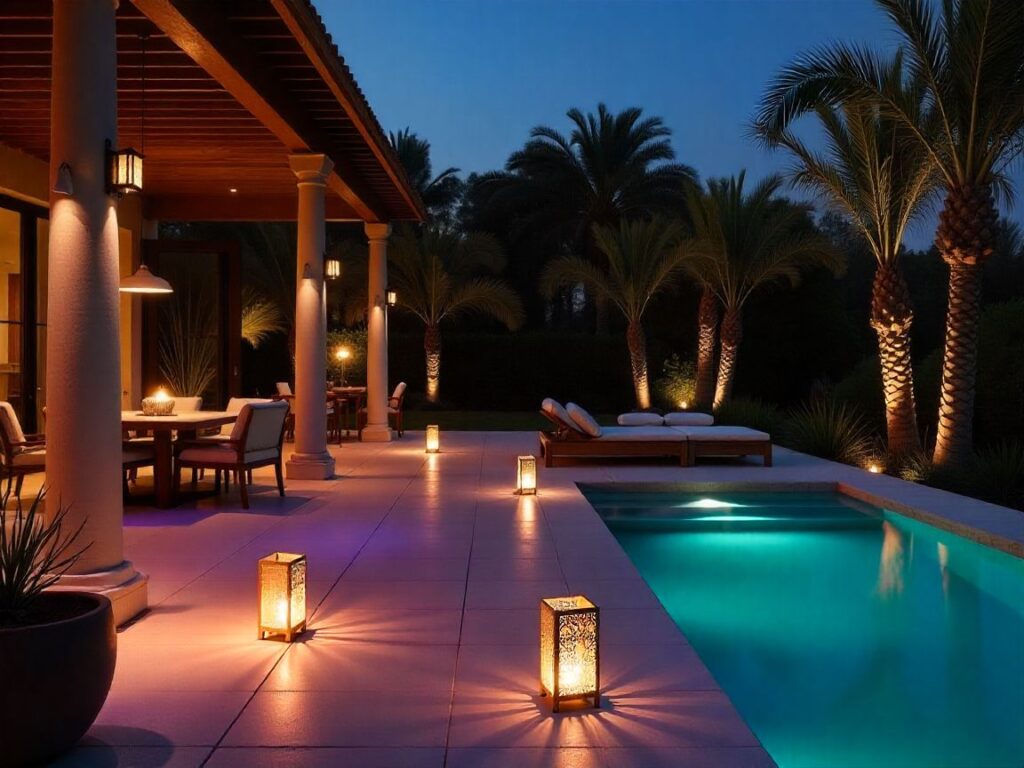
Make your outdoor patio inviting at night with layer lighting. Use bollards or step lights to guide paths. Dimmable pendants above the dining table provide task light. Soft uplights on columns or trees create a cozy mood.
Choose warm light colors between 2700K and 3000K for a welcoming glow. This makes food and skin look good. It also keeps glare low and sightlines clear.
In coastal areas, pick IP65 fixtures for wet zones. Use marine-grade finishes to resist corrosion. Brands like Kichler, Hinkley, and Tech Lighting have wet-rated options.
Use hardwired circuits with solar or low-voltage runs to save energy. Add smart dimmers, photocells, and timers. This makes lights adjust to dusk and activity, saving energy.
Lanterns add charm and a soft glow to seating and paths. Mix wired sconces with battery-powered lanterns for different scenes. This makes your patio extension flexible and stylish all year.
- Minimalist Patio Extension with Sliding Glass Doors
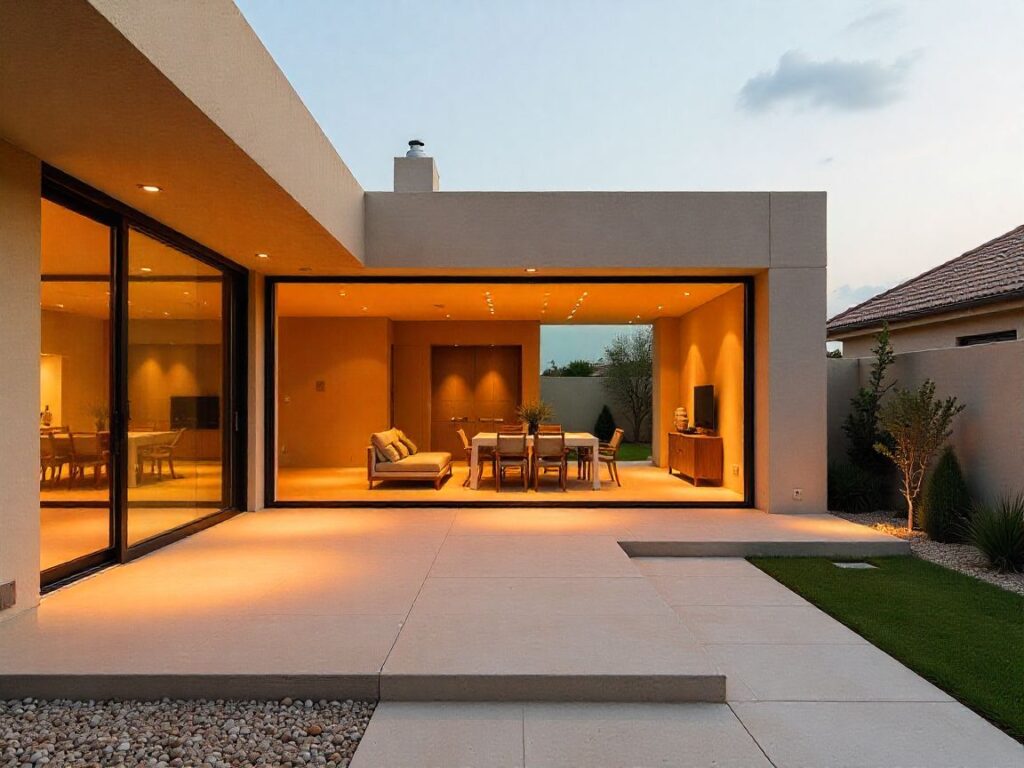
A modern patio extension is all about clean lines and simple details. Sliding panels from Weiland by Andersen or Western Window Systems open up the area. They have a low-profile track and slim stiles.
Matching flooring from inside to out makes it look like one big room. This design is perfect for a seamless transition.
- Flush thresholds and seamless transitions
Choose flush thresholds for easy walking and clear views. Recessed tracks fit well with both indoor and outdoor surfaces. This makes moving from inside to outside smooth.
Using the same grout and plank direction helps the area look connected. It makes the space feel bigger and more open.
- Thermal breaks and acoustic comfort
Thermally broken aluminum frames keep the area cool without being bulky. Add Low-E coatings and laminated glass for less heat and noise. This makes the patio a calm place.
In warm areas, tight seals and stainless hardware are key. They keep the patio looking good and working well.
- Neutral palettes and hidden drainage details
Stick to simple colors like sand, graphite, or white. These frames go well with limestone, concrete, or porcelain. They keep the look soft and neutral.
Hidden linear drains at the threshold keep rain away. This keeps the patio looking sleek, even when it rains.
Patio Extension Design for UAE and GCC Inspiration
Resort patios in Dubai and Abu Dhabi are cool and shaded. They use water and screens to block the sun. In the U.S., we track the sun and use reflective pavers to stay cool.
Patio extension ideas in UAE and Dubai design cues
Use metal or wood screens like the Louvre Abu Dhabi. This filters glare and frames views. Mix high-SRI stone with water features to cool down.
Low-E glass sliders keep homes cool. Add hidden drainage to avoid flooding.
Best patio extension for hot climates and GCC villas
Start with adjustable shade. Motorized louvers and screens work well in hot places. Use fans and mist lines to cool down.
Choose light-colored, reflective materials. Use marine-grade hardware for durability. These ideas work in hot U.S. climates too.
Pergola patio extension for Gulf homes and contractors
Powder-coated aluminum pergolas are great for heat and salt. They can have lights, heaters, and sensors. Look to UAE contractors for quality.
For a shaded patio, think about gutters, screens, and smart tech. This design is cool and works in American backyards.
Conclusion
A smart patio starts with the climate. Choose the right spot for shade and breeze. Use metals, timber, and finishes that last.
Add shading with louvers, awnings, and canopies. Ceiling fans, misters, and low-glare lights make it better. This turns a simple slab into a great outdoor space.
Adaptable designs make planning simple. Use pergolas, gazebos, and glass for changing seasons. Choose cool floors and durable fabrics for comfort.
This creates a patio that lasts and looks good all year. It’s perfect for daily use.
Start with shade and safe floors first. Then add a kitchen, water features, and lights as you can. These ideas mix Gulf comfort with U.S. practicality.
This makes a patio that’s useful all day. It’s cooler, quieter, and brighter where it matters.
When you plan well, a patio is more than an add-on. It becomes a room outside all year. It’s durable and welcoming.
FAQ
What makes a patio extension work in hot Gulf-like climates?
Use shade, airflow, and durable materials. Powder-coated aluminum pergolas and retractable awnings help. Choose Low-E glass and marine-grade stainless hardware.
Outdoor-rated fabrics like Sunbrella resist UV and humidity. These steps make your outdoor space cool and low-maintenance.
How should I orient a patio extension for natural cooling?
Block harsh western sun and open to breezes. Use solid roofs or deep overhangs to the west. Open pergola bays toward the wind.Check wind roses from NOAA or your local weather station. This improves comfort without mechanical cooling.
Which materials resist UV, salt, and corrosion best?
Powder-coated aluminum and 316 stainless steel fasteners are good. Composite decking like TimberTech AZEK also works well.For surfaces, choose porcelain pavers or light travertine and marble. Use Sunbrella or Serge Ferrari fabrics for shade. These choices last long in Gulf and coastal regions.
What are effective shading strategies for midday sun and glare control?
Use adjustable louver pergolas, retractable awnings, and vertical screens. Add Low-E coatings or UV films to glazing.Combine light-colored, high-SRI surfaces to reflect heat. This keeps your outdoor area cooler.
Do I need permits or HOA approval for a patio expansion?
Most projects need permits and HOA approval. Check setbacks, wind uplift, and structural anchoring. Confirm fire clearances and electrical code compliance.In hurricane zones, verify wind design speeds and fastening requirements. This ensures your structure is safe.
How do I design zones for an outdoor dining area and lounge?
Start with shade, then plan airflow and circulation. Separate grilling, dining, and lounging to avoid smoke and heat.Keep walkways clear and use 50–150 lux lighting over dining. Place fans for 100–200 fpm air movement. This makes your patio comfortable.
Are aluminum pergolas worth it for a shaded patio extension?
Yes. Powder-coated aluminum pergolas resist corrosion and offer adjustable louvers. They integrate gutters and provide rain protection.Brands like StruXure and Renson offer coastal-grade coatings. They are perfect for luxury patio designs in Dubai-inspired spaces.
What’s better for cooling—climbing plants or fabric shade?
Both work, but differ in maintenance and performance. Deciduous vines like bougainvillea provide seasonal shade but need care.High-performance fabrics like Serge Ferrari Soltis deliver immediate UV blockage. Many patios mix both for layered cooling.
How do I integrate fans, misters, and lighting into a pergola?
Plan conduits and structural backing during construction. Use UL Wet-rated ceiling fans and high-pressure misters.Add IP65-rated LED strips or spotlights. Side screens block low-angle sun and increase privacy. Smart controls automate scenes for day and night use.
What defines an outdoor majlis-style patio extension?
Low modular seating, breathable textiles, and shaded orientation define it. Add mashrabiya-inspired screens and lanterns for ambience.Use ceiling fans and optional floor cushions. This creates a welcoming outdoor majlis for Gulf homes and U.S. backyards.
Are retractable awnings reliable in wind and sun?
Quality systems with Somfy motors and wind/sun sensors are durable. Ensure proper slope for rain shedding and anchor into framing.Choose solution-dyed acrylic or PVC-coated polyester fabrics for UV and mildew resistance. Add drop valances to block low sun.
When should I choose a glass-enclosed patio extension?
Use it for year-round indoor-outdoor living. Frameless sliders or minimal-frame systems offer seamless transitions.Specify double or triple glazing with Low-E coatings. Pair with exterior shading, fans, and dehumidification for comfort.
What decking stays cooler underfoot?
Light-colored capped polymer or composite boards reduce heat absorption. Provide ventilation gaps and use 316 stainless fasteners in coastal zones.Add shade from pergolas or awnings. Step lighting and code-compliant railings complete a safe, modern patio extension.
Is stone or marble safe for poolside and food zones?
Yes, if finished and detailed correctly. Choose high-SRI travertine, tumbled marble, or porcelain pavers.Specify slip-resistant textures and pitch surfaces toward drains. Light beiges and grays resist fading; seal with breathable sealers. Porcelain excels in outdoor kitchens.
What should an outdoor kitchen include in a patio extension?
Use heat- and UV-proof counters like Dekton or Neolith. Choose marine-grade 316 stainless or powder-coated aluminum cabinetry.Add sinks, cold storage, and beverage centers. Provide vent hoods, GFCI outlets, gas shutoffs, and task lighting. Respect clearances from combustibles.
Covered patio extension or open-air—how do I choose?
Covered spaces offer all-weather use and protect finishes. Open-air areas suit stargazing and flexible gatherings.A hybrid works best: a solid roof for shade and rain with an open deck or lawn. Plan around social hubs and maintain circulation for outdoor entertainment areas.
Are adjustable-louver pergolas good for shoulder seasons?
Yes. Motorized louvers rotate to track the sun, vent hot air, and seal against rain. Add side screens, heaters, and integrated LEDs for comfort.Ensure robust footings, concealed wiring, and coastal-grade coatings. This is a hallmark of modern patio extensions in Gulf countries and the UAE.
Can water features actually cool a patio?
Shallow rills, bubblers, and wall fountains promote evaporative cooling and sound masking. Place them upwind to carry cooled air across seating.For compact yards, a plunge pool with a light finish, bench seating, and an auto-cover boosts comfort while reducing evaporation.
Are fabric canopies and sail shades durable?
Properly engineered tensile canopies using HDPE or PTFE-coated fiberglass offer high UV block and airflow. Design catenary curves, specify stainless turnbuckles, and anchor to substantial footings.Maintain slopes for rain runoff and consider quick-release hardware for storms. Light colors reflect heat and complement shaded patio extension ideas.
How do I build-in seating without mold or soggy cushions?
Use masonry or concrete bench walls with vented, drained storage cavities. Specify reticulated quick-dry foam, solution-dyed acrylics, marine-grade zippers, and Velcro anchors.Arrange U or L layouts to frame a table or fire feature. Keep clearances for easy movement in a patio expansion.
What’s the best way to add greenery without taking floor space?
Install a green wall or trellis-based vertical garden. Systems from GSky or Woolly Pocket with drip irrigation and fertigation keep maintenance simple.Choose heat-tolerant climbers like star jasmine or bougainvillea, add stainless trellis hardware, and position to shade west or south walls for a cooler outdoor patio extension.
How do I specify a luxury gazebo that handles wind and salt?
Select pavilion or cabana-inspired forms with standing seam aluminum roofs, composite columns, and marine-grade finishes. Integrate screens or drapery for privacy.Add UL Wet-rated fans, damp-rated chandeliers, and smart controls from Lutron or Crestron. Anchor per wind-load requirements and conceal conduits for a refined, covered patio extension.
What lighting plan works best for outdoor living?
Layer ambient, task, and accent light. Use path or step lights for safety, dimmable pendants over dining, and uplights on columns or trees at 2700–3000K.Choose IP65 fixtures with corrosion-resistant housings in coastal climates. Pair hardwired circuits with low-voltage or solar, and add photocells and timers for efficiency. Lanterns finish a stylish patio extension.
How do sliding glass doors create a minimalist patio extension?
Large-format sliders with flush tracks create seamless transitions. Specify thermally broken frames, Low-E insulated glass, and optional laminated panes for acoustic comfort.Conceal linear drains at thresholds and use neutral frame colors that echo stone or porcelain flooring. This creates a clean indoor-outdoor flow.
What patio extension ideas from UAE and GCC projects translate to U.S. homes?
Deep shade structures, mashrabiya-inspired screens, reflective flooring, and water elements work well. Motorized louver pergolas, Low-E glazing, and outdoor-rated textiles proven in UAE villas provide durability in hot climates.Work with patio extension contractors in the UAE for reference standards, then adapt for local codes and conditions in U.S. backyard renovations.
How can I start a phased backyard renovation for a patio extension?
Begin with shade and surfaces—pergolas, canopies, and cool-to-the-touch pavers. Add lighting and fans next, then layer in an outdoor kitchen, water features, and built-in seating. This approach creates a resilient outdoor living space that’s comfortable now and easy to upgrade later.